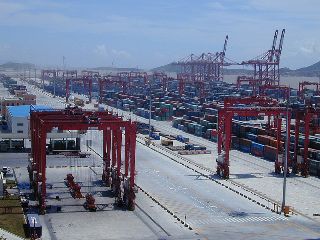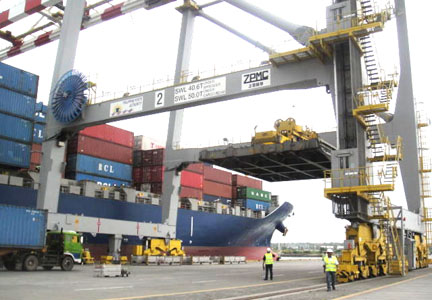


STAKEHOLDERS in the Philippine shipping industry seek cargo volume and port efficiency to encourage shipping lines to shift to Batangas or Subic port.
Association of International Shipping Lines (AISL) president Edgar Milla aired the concerns of international shipping lines, which incurred cumulative losses of more than $4 million in previous years trying to use those two ports.
Batagas is two hours south of the Philippine capital Manila and Subic three hours north of Manila.
Milla spoke at the recent forum held jointly by Department of Justice and the Philippine Ports Authority to listen to stakeholders’ views on a proposal to shift cargoes from the Port of Manila to the Batangas and Subic ports.
AISL, which boast 41 members comprising foreign container lines that serve the Philippines, has long been discussing what will attract shipping lines to a port.
“Basically, it’s the volume. If there is container traffic in a port, I’m 100% sure there’s a shipping line in that terminal,” he said, adding that “shipping lines want to make money as well.”
He recalled that before any development was done in Batangas in 2011, APL went there after talking to two customers.
“Those two committed to a certain volume, which made APL call on a weekly basis. That happened over two years. Unfortunately, they (later) didn’t have the volume for (APL) to call in Batangas,” he said.
He said now there is only one international liner in Batangas (MCC), adding that three other carriers tried and left.
He explained when trade develops in a certain area, shipping lines will come, like what happened with Phividec 10 years ago, when it opened Tagoloan port in Misamis Oriental. Eventually, liners shifted to Tagoloan and after four years there were no more callers at Macabalan port in Cagayan de Oro.
“It’s because, the volume was there and the market. The customers were asking us to be at Tagoloan,” Milla said. (Tagoloan is the location for the Mindanao Container Terminal.)
In Subic, two international liners (APL and Wan Hai) call with a commitment to serve the market on a weekly basis.
“For Subic and Batangas, the carriers will go where the cargo is. We are an important part of the chain so moving forward, we want to give our inputs,” he said.
Meanwhile, Philippine International Sea Freight Forwarders Association Inc. executive vice president Mariz Regis, said to be able to entice or attract clients such as importers or exporters in Philippine Economic Zone Authority, they must see ease in doing business.
She said they don’t want high costs as well as congestion, which she said will also increase expenses.
“We want to be globally competitive, we want properly priced groups. We want to see that there is a concerted effort and government will help make business done easier. Cheaper for all proponent in the port industry because it translates to cheaper goods and make the country globally competitive,” she said.
Image courtesy of Asian Terminals, Inc