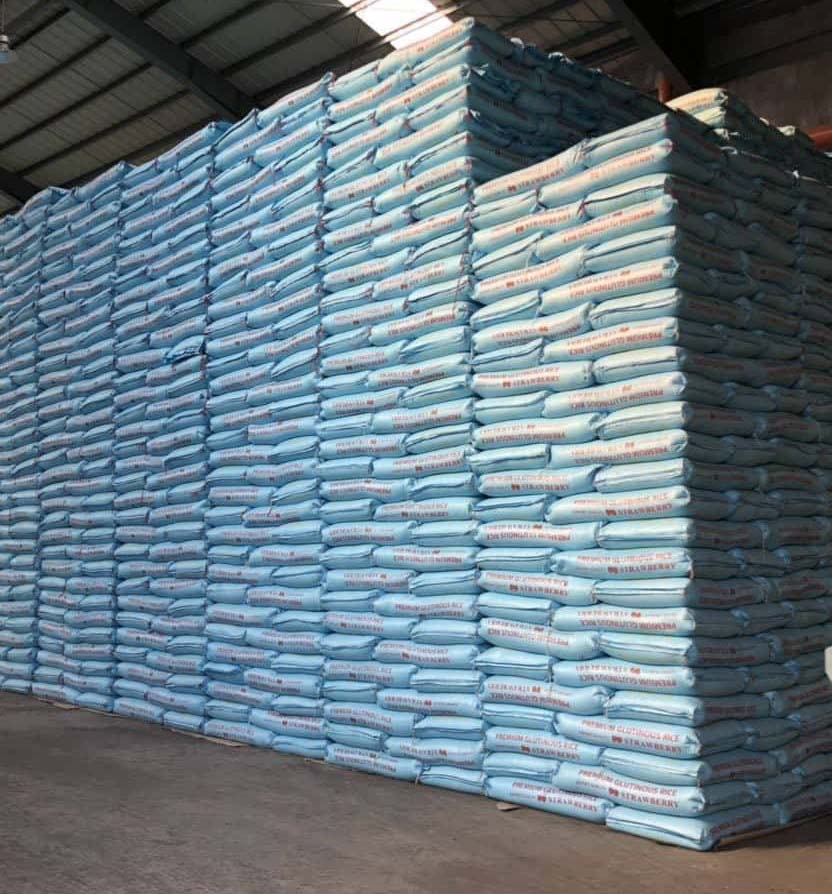

 All rice shipments that arrived at Philippine ports starting March 5, 2019, regardless of the date of their departure from the port of origin, are no longer required under the new Rice Tariffication Law to have import permits, according to the Bureau of Customs (BOC).
Customs commissioner Rey Leonardo Guerrero in a memorandum dated March 26 noted that the need for an import permit is inconsistent with provisions of Republic Act (RA) No. 11203, or the Rice Tariffication Law, whose Section 19 already repeals or modifies all laws, decrees, executive issuances, and rules and regulations that are inconsistent with the new law.
“Moreover, the law does not provide for any saving clause that would necessitate the submission of an import permit from the NFA [National Food Authority] for rice importation prior to the effectivity of the law, on March 5, 2019, but arrived thereafter,” Guerrero said.
The Customs chief reiterated that instead of the import permit, BOC will require from importers a sanitary and phytosanitary import clearance (SPSIC) from the Bureau of Plant Industry (BPI) prior to importation. Rice importations should arrive before the SPSIC from the BPI expires.
These clarifications in the memorandum are supplemental interim guidelines issued by BOC to further explain procedures for processing rice importations while waiting for the implementing rules and regulations (IRR) of the Rice Tariffication Act. Guerrero on March 5 signed BOC’s interim guidelines, which state that all rice importations shall now undergo regular customs cargo clearance procedure since, under RA 11203, the NFA no longer exercises regulatory functions over international and domestic trading of rice.
Under RA 11203, instead of quantitative restrictions (QR), the maximum bound rates committed under the Uruguay Final Act (The Final Act Embodying the Results of the Uruguay Round of Multilateral Trade Negotiations) shall be imposed on agricultural products whose QRs have been repealed by the new rice tariffication law.
The new law was passed in a bid to further slash rice prices and bring down the cost of living.
Payment of advance customs duty/tariff for rice importations is also no longer required.
For rice imports originating from the Association of Southeast Asian Nations (ASEAN) member states, the import duty rate of 35% under the ASEAN Trade in Goods Agreement (ATIGA) will apply; for shipments within the 350,000 metric ton minimum access volume (MAV) and imported from World Trade Organization member-countries outside Asean, 40%; and imports above the MAV and originating from non-ASEAN World Trade Organization member states, 180%.
Due to the perishable nature of rice importations and to protect the interest of the government, district collectors may allow the release of goods pursuant to Sections 403 (Provisional Goods Declaration) and 426 (Tentative Assessment of Provisional Goods Declaration) of the Customs Modernization and Tariff Act, pending the issuance of the IRR of RA 11203.
The Customs chief also enjoins all concerned “to process expeditiously all rice importations that arrived commencing 5 March 2019” in accordance with the interim guidelines and supplemental interim guidelines.





