 Two consortiums on the Southeast Asia-Australia trade will consolidate their service networks starting the middle of April, deploying fewer but bigger vessels.
The combined weekly service will be called ASAL (South East Asia-Australia Service) and will combine the existing ASA (Singapore-Australia Service) and SAL (Asia-Australia Container Service) networks.
To sail starting April 19, the ASAL will deploy five larger ships, down from the total of eight smaller ships used by ASA and SAL.
The ASA is operated by ANL, Hanjin Shipping, OOCL, and RCL. It deploys four 1,900-TEU-class ships covering Jakarta, Singapore, Brisbane, Sydney, Melbourne, and Jakarta.
The SAL is run by CSCL, HMM, Hapag-Lloyd, and UASC with four 2,250-TEU-class ships with a port rotation of Port Kelang, Singapore, Sydney, Melbourne, Adelaide, and Port Kelang.
The newly merged service will be jointly operated by CSCL, Hanjin Shipping, Hapag-Lloyd, RCL, and UASC with five 3,400- to 3,600-TEU class ships offering weekly sailings to all ports previously covered by the separate services. HMM and OOCL will participate in the service through slot purchase.
The ASAL, or AUS (Australia Service) for Hanjin Shipping, will follow a port rotation of Jakarta, Port Kelang, Singapore, Brisbane, Sydney, Melbourne, Adelaide, and Jakarta.
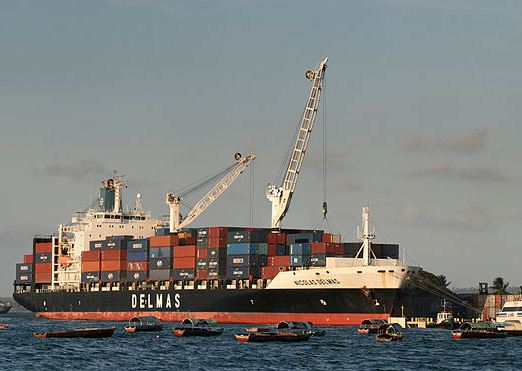
Photo: expom2uk