
 Following the flurry of activities to create alliances last year, the container shipping sector is expected to continue the trend towards ongoing consolidation, says Clarksons in a new analysis.
The research consultant said that while already comparatively more consolidated than other shipping sectors, the liner shipping business is still expected to grow even more tightly knit in the future.
At the start of 2017, the 5,154 containerships in the fleet were owned by 622 owner groups. This translated to about eight ships per owner and 326 operators with about 16 ships per operator. Each of the top eight operators deployed more than 100 ships.
The three largest operators by deployed capacity at the start of 2017 were European: Maersk Line (647 vessels deployed) followed by MSC (453) and CMA CGM (454). Of the remaining carriers in the top 20, all but three were based in Asia or the Middle East.
“However, what’s really interesting is that out of the 20 largest carriers back in late 2014, 4 are now gone. CSAV was acquired by Hapag-Lloyd, NOL/APL by CMA-CGM and the two major Chinese lines merged. And of course in late summer 2016, the financial collapse of Hanjin Shipping marked the sector’s biggest casualty in 30 years,” said Clarksons.
Against this backdrop, the latest wave of box sector consolidation is actually part of a long-term trend, it noted. In 1996 the top 10 carriers deployed 45% of capacity and at the start of 2017 that figure stood at 70%.
The coming year is set to see Hapag-Lloyd complete its merger with UASC, and Maersk Line’s planned acquisition of Hamburg Sud is also awaiting necessary approvals. The second half of last year also saw the three major Japanese operators declare their intention to merge containership operations in a joint venture due to be established this year and start operations in 2018.
“The ‘scenario’ based on these changes would see the top 10’s share at 79%, nearly twice as much as 20 years ago,” said the report, noting that “both the long-term trend and recent developments point towards ongoing consolidation.”
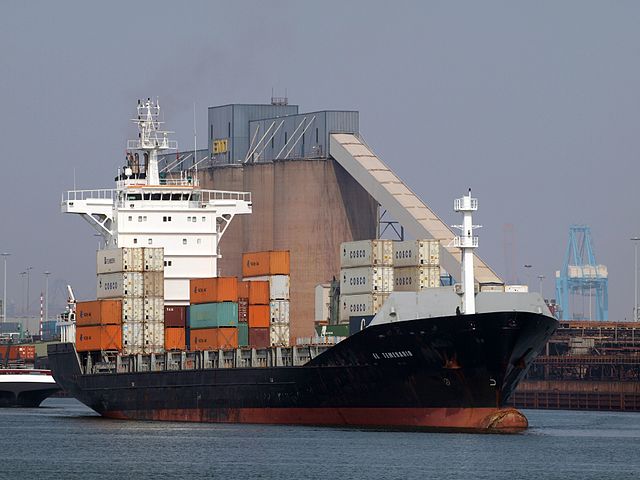
Photo: AlfvanBeem