 Severe rivalry has dragged Cathay Pacific Airways deeper into negative territory with a reported attributable loss of HKD2.05 billion (US$262.2 million) for the first six months of 2017 compared to an attributable profit of HKD353 million for the same period in 2016. The airline had an attributable loss of HKD928 million in the second six months of 2016.
This is the Hong Kong flag carrier’s worst first-half loss in at least 20 years in the face of fierce competition from low-cost carriers, and the carrier is not optimistic about its prospects for the second half of the year.
“Fundamental structural changes within the airline industry continue to affect the operating environment for our airlines and created difficult operating conditions in the first half of 2017,” said group chairman John Slosar in a written statement.
He said the adverse factors that impacted their performance this year were the same as last year’s. Intense competition was the most significant, followed by higher fuel prices (including the effect of the company’s hedging), the strong Hong Kong dollar, and higher aircraft maintenance costs.
Several special factors also affected results in the first half of 2017, the company said. In March, the European Commission imposed a fine of EUR57.12 million on Cathay Pacific and other international air cargo carriers for infringing European competition law.
To effect a turnaround, Cathay Pacific launched in the first half of 2017 a three-year reorganization program intended to adapt to the fundamental challenges in the airline industry. In May, it announced the revamp of its head office that led to associated redundancy costs amounting to HKD224 million.
The overhaul aims for a return to profitability and for higher cost savings, even as Cathay Pacific said it will strive to strengthen its brand and maintain “our high standards, identity and excellence in a challenging environment.”
“Through the transformation, Cathay Pacific is intended to emerge as a leaner, more agile and more profitable airline that responds to changing market trends and customer preferences,” said Slosar.
Passenger, cargo results
The group’s passenger revenue in the first six months of 2017 was HKD32.10 billion, a decrease of 3.9% compared to the same period in 2016. Capacity increased by 1.1%, reflecting the introduction of a route to Tel Aviv and increased frequencies on other routes. The load factor increased by 0.2 percentage points, to 84.7%. Yield fell by 5.2% to HKD51.5 cents, reflecting intense competition in all classes and the adverse effect of the strength of the Hong Kong dollar on revenues denominated in other currencies.
Cargo revenue improved, reflecting robust demand. Tonnage carried grew faster than capacity, and yield benefited from the resumption (from April) of fuel surcharges and improving demand for Mainland China exports. Demand for shipments within Asia was stronger and shipments on European routes grew.
The group’s cargo revenue in the first six months of 2017 was HKD10.51 billion, an increase of 11.7% compared to the same period in 2016. The cargo capacity of Cathay Pacific and Cathay Dragon increased by 2.3%. The load factor increased by 4.0 percentage points, to 66.2%. Tonnage carried increased by 11.5%. Yield increased by 4.4% to HKD1.66.
Outlook
On short-term prospects, Slosar said, “We do not expect the operating environment in the second half of 2017 to improve materially. In particular, the passenger business will continue to be affected by strong competition from other airlines and our results are expected to be adversely affected by higher fuel prices and our fuel hedging positions.”
However, he said the outlook for the cargo business is good and they expect robust demand and growth in cargo capacity, yield and load factor in the second half of this year. “We expect to see the benefits of our transformation in the second half of 2017, and the effects will accelerate in 2018.”
“We are addressing the industry challenges through our corporate transformation and by expanding our route network, increasing frequencies on our most popular routes and buying more fuel-efficient aircraft. This will help us to increase productivity and to reduce costs while improving the quality of our services to customers,” said the airline official.
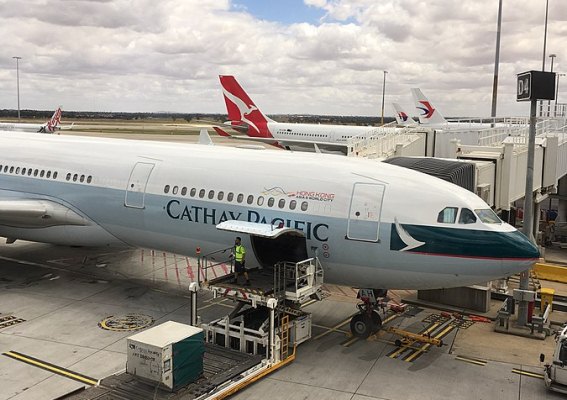
Photo: Vincent Öhlander Rice