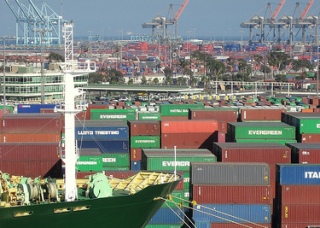

 Despite attempts at void sailings and capacity reduction on the east-west trade routes, carriers could not push through with most of the planned freight rate hikes due to weaker cargo volumes, says Drewry Maritime Research’s latest Container Forecaster report published in late December.
Since the successful implementation of general rate increases (GRIs) in March 2012 to bring rate levels back above break-even, shipping lines have made a further seven attempts to lift rates, totaling around $2,800 to $3,000 per 40-foot-equivalent unit on the Asia to North Europe trade.
During this period, average headhaul freight rates have actually declined from about $2,700 in early March to $2,400 as of early January 2013, Drewry said.
While not a disaster for carriers, this points to a fundamental weakness in the market, compounded by low volumes on the back of a non-existent peak season last year, the London-based maritime consultancy added.
The strategy of missing sailings also proved insufficient to lift freight rates for any sustainable period.
“The emphasis on this tactic (missed sailings) will only lead to severe volatility in the spot market with carriers reacting to weaknesses on a temporary basis, with the GRIs essentially being used to prohibit further rate erosion, rather than advancing them by any sustainable margin,” said Neil Dekker, Drewry’s head of container research.
The marked reluctance by carriers to pull enough capacity, particularly in the Asia-Mediterranean trade, has not helped.
And with another 40 ships of at least 10,000 20-foot-equivalent units due for delivery this year, carriers will have a very difficult time deploying them without doing further damage to the supply/demand balance. Operational alliances across virtually all global trade lanes will certainly increase, Drewry predicted.
For 2013, Drewry sees an increase of 4.6 percent in global demand, but identifies several hurdles to this, including considerably faster capacity growth at the trade route level. “It cannot be ignored that the headhaul compound annual growth rate of the three core east-west trade lanes in the 2008-12 period has been only 0.4%,” Drewry said.
Overall, the destiny of 2013 remains firmly in the carriers’ hands once again as they need to quickly react to the new reality of weaker demand growth in an era of growing capacity, it added. Carriers are unlikely to replicate the GRI successes of last March on an industry collective resolve alone.
“Carriers’ obvious reluctance to pull capacity in the core trades since October suggests that many still have an eye on trade share,” Dekker said. “Carriers seem to want to have it both ways. The core trade lanes are undergoing a major upgrading process with over 40 x 10,000 teu vessels delivered in 2012, but at the same time they are refusing to lay up or idle significant tonnage.”
Photo: jaybergesen





