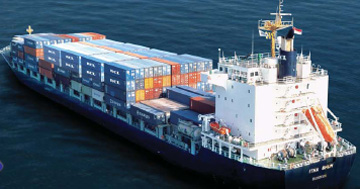
Box ship operators will be in a constant battle to sustain rates and stay profitable this year as more ships are poised to join the trade in the current weak demand environment, according to Drewry Maritime Research’s latest issue of the quarterly Container Forecaster.
The industry managed the influx of new vessels quite well in 2012, reducing by 1.6 percent its operational headhaul capacity in the three main East-West trades with the help of slow steaming.
Missed sailings between October and February also lifted average load factors in the East-West trades by 2 percent to 5 percent, “but there is no evidence that this improves the success of GRI [general rate increase] attempts over any sustained period of time,” Neil Dekker, Drewry’s head of container research, stated.
As of January 2013, an average of 10.3 vessels were assigned to weekly strings in the three core East-West trades, up from 10.1 last October. But by end-April, year-on-year capacity on the three trades will rise by nearly 1 percent, estimates Drewry. In the second quarter, capacity on the headhaul will increase by 10.2 percent on Asia-North Europe and 5.5 percent on the trans-Pacific.
With over 40 ships of at least 10,000 TEUs (20-foot-equivalent units) due for delivery in 2013, carriers will find it increasingly difficult to manage capacity and could be forced to take more drastic measures, such as suspend whole strings.
Adding to their difficulties are the launches of Evergreen’s new CPS2 trans-Pacific service in May and MSC’s stand-alone service on the Asia-East Coast South America trade this month.
More 8,000-TEU vessels are also being pushed into the Asia-East Coast South America trade, where headhaul cargo is expected to grow by only 3 percent to 4 percent in 2013.
Carriers already have a taste of how difficult it will be to resist falling rates this year, Drewry said. The mid-March Asia-North Europe GRI was successful at first, with increases of over $300 per FEU (40-foot equivalent unit), but most gains had already been lost by the end of the first week.
How to absorb additional capacity is the number one issue for carriers in 2013 if they are to have any chance of being profitable, although all of them are doing their best to cut operating costs, said Drewry.
Photo: Quiltsalad