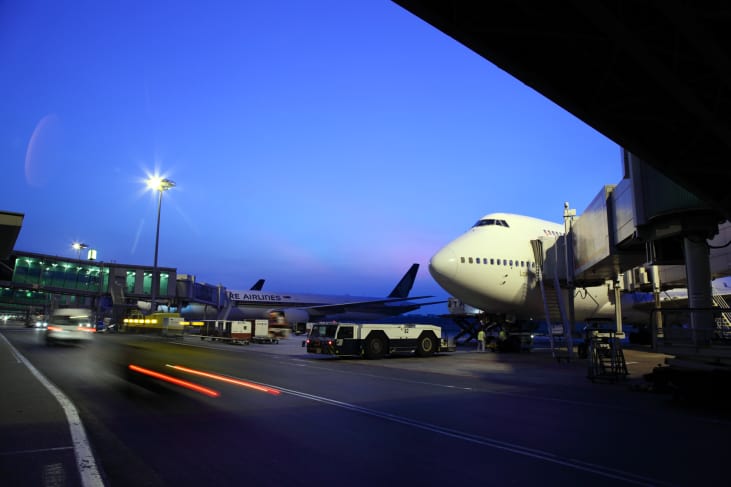

 Singapore Changi Airport announced it is the first airport in Asia to join pharmaceutical-focused organization Pharma.Aero as a strategic member, alongside partner Singapore Airlines Cargo which comes on board as a full member.
Both Changi Airport and Singapore Airlines Cargo envisage this effort to raise pharmaceutical handling capabilities at Changi Airport, said a statement from the Changi Airport Group.
An organization comprising of stakeholders of the air cargo supply chain from around the world, Pharma.Aero seeks to achieve excellence in end-to-end air transportation for pharma cargo. Brussels Airport and Miami Airport are the founding members, while other members include Sharjah International Airport, Brussels Airlines, and Brinks Life Sciences.
Lim Ching Kiat, managing director of air hub development of the Changi Airport group, said pharmaceuticals is among the airport’s fastest growing cargo segments, registering a 19% year-on-year growth in the first nine months of 2016. Pharmaceuticals that pass through the hub include vaccines, tablets, and pills.
“Our participation in Pharma.Aero will further strengthen our capabilities to handle pharma cargo and enhance the pharma supply chain in Singapore,” he said.
The Southwest Pacific and Northeast Asia regions account for 45% of total share of pharmaceutical cargo at Changi Airport. In terms of volume, Australia, China, and India are Changi’s top three pharmaceutical markets on a year-to-date (January to September 2016) basis. The top markets showing strongest growth for the period are China (51%), Vietnam (35%), and Hong Kong (32%).
Changi Airport is well-equipped with specialized facilities to handle these temperature-sensitive products and be the preferred gateway of pharma cargo in Asia, said the release. It said both ground handlers (Coolport by SATS and Coolchain by dnata) can handle more than 300,000 tonnes of temperature-sensitive cargo annually.
Pharmaceutical cargo is the sixth most valued segment in total air cargo handled, and accounts for under 10% of total value of cargo handled.
Global spending on pharma cold chain logistics is projected to grow at 8% to 9% per year, totaling US$16.7 billion by 2020, according to Pharmaceutical Commerce. Asia is expected to account for the largest regional share growth with more than $1.2 billion of cold-chain growth through 2019.
Changi Airport said it hopes to strengthen its pharmaceutical cargo handling capabilities by attaining IATA CEIV (Center of Excellence for Independent Validators in Pharmaceutical Logistics) certification, and implementing best practices in pharmaceutical cargo management.