
 The Inter-agency Council on Traffic (i-Act) and the Metro Manila Council (MMC) have agreed to extend by one more hour the coding hours under the Unified Vehicular Volume Reduction Program, otherwise known as the number coding scheme, as well as to expand the areas covered by the “no window hours” policy for coded vehicles.
From the current 7 a.m. to 7 p.m., coding hours will soon run from 7 a.m. to 8 p.m. Further, the “no window hours” scheme for coded vehicles will be covering all radial roads (R1 to R10) and circumferential roads (C1 to C6) in Metro Manila.
These measures will take effect on November 1, or five days after publication of a resolution signed by Metro Manila mayors who form the Metro Manila Council (MMC).
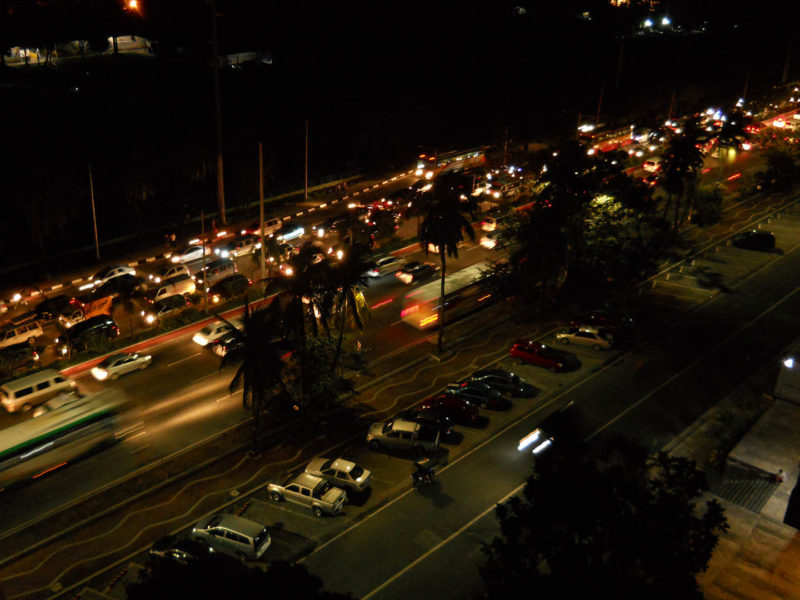
The extended coding hours and expanded coverage of the “no window hours” policy aim to decongest traffic flow and reduce the volume of vehicles on national roads in Metro Manila, the Department of Transportation (DOTr) said in a statement.
Currently, the “no window hours” are in effect on EDSA, C5, Roxas Boulevard, and Alabang-Zapote Road, as well as in the cities of Mandaluyong, Las Piñas, and Makati.
DOTr said Metro Manila mayors and traffic managers have responded positively to the measure, paving the way for the expansion of its covered areas.
The circumferential roads to be affected by the “no window hours” are EDSA; C1 (CM Recto to Padre Burgos Street); C2 (Abad Santos to Quirino Avenue); C3 (Libis Gocheco St. to Buendia); C4; C5 (Mindanao Avenue-NLEX to Sucat Road); and C6 (Bulacan-Rizal-Manila-Cavite Regional Expressway).
The radial roads to go under the policy are R1 (A. Bonifacio to A. Soriano Highway); R2 (Taft Ave. to Tagaytay-Talisay Road); R3 (SLEX to Southern Tagalog Artertial Road); R4 (Pasig Line to Taytay Diversion Road); R5 (V. Mapa to Manila East Road); R6 (Legarda to Marikina-Infanta Highway); R7 (Lerma to San Jose del Monte-Norzagaray Road); R8 (Quezon Blvd. to Rosario-Pugo Road); R9 (Rizal Avenue to MacArthur Highway); and R10 (Tondo to Manila-Bataan Coastal Road).
The new scheme started on October 17 and will run until January 31. After that, i-ACT will assess the impact of the scheme and determine if it indeed reduced traffic congestion in the metropolis, said DOTr. Based on the assessment by the inter-agency, the MMC will then decide whether to extend the policy further, even permanently.
Cargo trucks and other heavy vehicles, whether empty or loaded, continue to be covered by the MMDA truck ban. However, trucks with Terminal Appointment Booking System appointments are exempt from the ban.