 The Committee on Tariff and Related Matters (CTRM) is against a decrease in tariff on agricultural commodities as a means to fight inflation in the Philippines.
“Based on the report of the Tariff Commission, modifying tariff rates will not have a significant impact on prices of agricultural products because many of these have relatively lower tariff base already, or would have landed costs lower than local prices,” Trade Secretary Ramon Lopez, CTRM co-chair, said in a statement.
He added there will be minimum movement if tariff is brought down to 5%, as suggested by some sectors.
“Instead, we (will) focus on supply-oriented actions and volume enhancements that would have immediate impact,” he said.
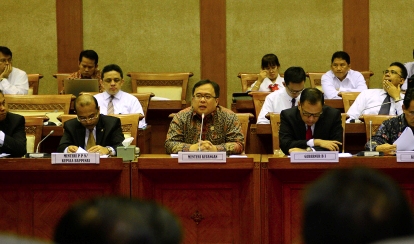
CTRM, which is co-chaired by Agriculture Secretary Emmanuel Piñol and includes other government agencies, in a meeting on August 15 discussed results of the public hearing on the earlier proposed tariff modification on meat, edible offal, fish, edible vegetables, feed wheat, and corn.
During that meeting, it was concluded that the reduction on most favored nation rates will not significantly reduce prices as the agricultural products are already being sourced from free trade agreement partners under lower preferential rates.
“We need to focus our efforts in finding realistic and practical solutions to lower the prices while balancing the interests of both consumers and producers,” Lopez said.
The CTRM meeting was also attended by the departments of Finance, Budget and Management, Foreign Affairs, Labor and Employment, Agrarian Reform, and Transportation. Representatives of the Office of the Executive Secretary, Bangko Sentral ng Pilipinas, Tariff Commission, Board of Investments, and National Economic and Development Authority were also present.
Earlier, the Department of Agriculture (DA) issued a Certificate of Necessity allowing a maximum 17,000 metric tons of mackerel scad (galunggong) to be imported by accredited fish importers in order to stabilize fish prices. The fish will only be unloaded in Bureau of Fisheries and Aquatic Resources (BFAR)-accredited cold storage facilities and sold in Navotas Fishport.
“We’re also amending the Fisheries Administrative Order No. 195 to allow the sale of imported fish in wet markets,” Piñol said.
DA also requested the Bureau of Customs to temporarily suspend imposition of Special Safeguard Measures on chicken meat imports.
In the case of pork supply, it was reported that minimum access volume (MAV) certificate holders utilize 50% only of their import allocations. Piñol directed MAV certificate holders to use their allocations, otherwise, these can be cancelled and rebidded.
The Department of Trade and Industry and DA will be conducting regular inspection of commodity importers’ warehouses to establish levels of inventory. Likewise, arrival and distribution of National Food Authority rice imports will be monitored.