 The confidence of the cargo transport sector continues to inch up slightly in September but remains in negative territory for the 12th month, according to the latest results of the Stifel Logistics Confidence Index.
With a fourth consecutive month-on-month increase registered in September, the index for sea freight has shown that confidence appears to be creeping back into the industry despite the capacity crisis.
The collapse of Hanjin Shipping, which filed for bankruptcy on August 31, is the most noteworthy development in the box shipping liner sector recently. While this is unfortunate for the South Korean carrier, other carriers appear to think otherwise, seeing it as a reprieve for them.
“Should the South Korean Government elect not to intervene on behalf of Hanjin Shipping, the company’s death may well serve as a stay of execution for other carriers under financial pressure,” said the report.
This is due to the foreseen reduction in capacity with the removal of Hanjin from the picture. According to the Journal of Commerce, Hanjin Shipping accounted for 7.85% of trans-Pacific containers inbound to the U.S. during the first half of 2015. Moreover, the shipping line accounted for around 9% of Asia-Mediterranean trade during the same period.
With the disabling of Hanjin also comes a price hike, said the report. It pointed to the Shanghai Shipping Exchange measuring a 51% increase in the spot rate for shipping a 40-foot container from Asia to the U.S. West Coast last week to US$1,746 per FEU.
This rate spike, along with the disruption in ocean shipping, could bring benefits to air freight as well, said the report. It could “incentivise many customers to switching their products to air freight transportation, as with the West Coast labor dispute of 2014.”
The CEO of Atlas Air noted that “It [the bankruptcy] could mean opportunities for air freight.” Nonetheless, he also suggested that the situation could change dramatically with the prospect of government intervention.
For the air freight business, the overall air index recorded a small rise, driven by a slight improvement in expectations while sentiments on the current situation fell.
Current confidence levels on the lanes between Europe and Asia recorded contractions, whilst those between Europe and the U.S. achieved gains.
For the expected situation, all but one of the lanes surveyed—Europe to Asia, which posted a decrease—noted month-on-month improvements. Asia to Europe showed higher confidence, as did U.S. to Europe. The most significant gain was recorded on the Europe to U.S. lane.
In sea freight, the logistics index noted a minor increase, as stakeholders reported an increment in current confidence levels, which offset a decline in expectations.
The increase in confidence in the present situation was seen in three of the four lanes. Only Europe to U.S. registered a decline, while the most marked gain came from the U.S. to Europe lane.
The minor slide in expectations was due to a mixed set of results. The Europe to U.S. lane and Asia to Europe lane both fell, but Europe to Asia went up, and U.S. to Europe lane remained unchanged.
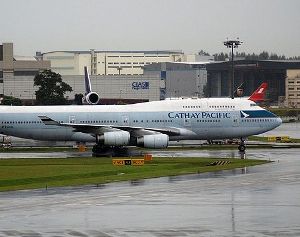
Photo: S3l3totsirA