The Metro Manila Subway broke ground on February 27 in Valenzuela City, signalling the start of construction of the country’s first underground railway system.
Set to run at 80 kilometers per hour, the 36-kilometer system will have 15 stations from Quirino Highway in Quezon City to Ninoy Aquino International Airport (NAIA) Terminal 3 in Pasay and Food Terminal Inc. (FTI) in Taguig, crossing seven local governments, and passing through three of Metro Manila’s business districts in just 30 minutes.
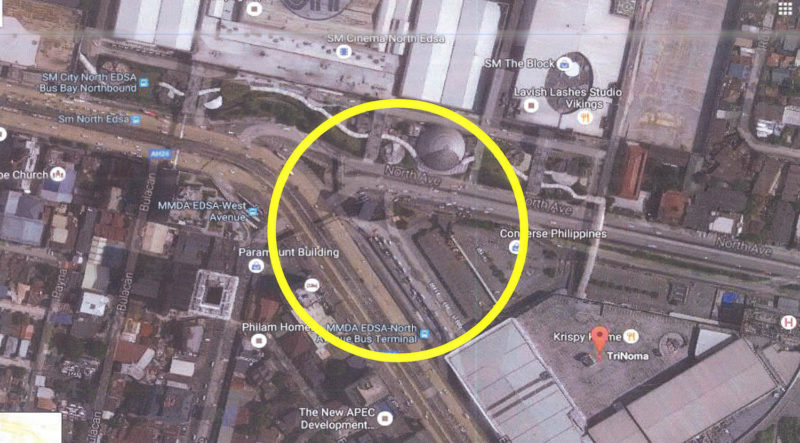
The first three stations (Quirino Highway, Tandang Sora, and North Avenue) are targeted for opening by 2022 while full operations will be in 2025. In its first year of full operations alone, the underground rail system is expected to serve up to 370,000 passengers per day, with a capacity to serve up to 1.5 million passengers daily.
 The subway will be connected to other major rail lines such as the Philippine National Railways (PNR) Clark, PNR Calamba, and the Common Station to ensure interconnectivity, intermodality, and interoperability.
To signify start of the project, Executive Secretary Salvador Medialdea, Japanese Ambassador to the Philippines Koji Haneda, Transportation Secretary Arthur Tugade, some members of the Cabinet, and local government officials led the unveiling of the scale model of the tunnel boring machine, along with the ceremonial shoveling of the ground where the subway’s depot will stand.
A flagship project under the administration’s Build, Build, Build infrastructure program, the first phase of the Metro Manila subway will be constructed using cutting-edge Japanese tunneling technology and a JPY104.53 billion (about P49.11 billion or US$943.34 million) loan from Japan.
The construction of the subway is a collaborative effort with the Government of Japan through a P365-billion official development assistance loan from the Japan International Cooperation Agency.
The first phase will stretch from Mindanao Avenue in Quezon City to FTI, before continuing to NAIA.
 The Metro Manila Subway will employ proven Japanese technologies that make the system resilient against weather and seismic events, according to project lead Department of Transportation.
Last February 20, DOTr and Japanese firm Shimizu Corp. signed the contract that has been awarded to the joint venture of Shimizu, Fujita Corp., Takenaka Civil Engineering Co., Ltd., and EEI Corp.
Prior to the groundbreaking, some Philippine government executives and Japanese officials went to Japan on February 19 to inspect tunnel boring machines being considered for the construction of the Metro Manila Subway.
The tunnel boring machines are being manufactured by Hitachi Zosen in Sakai City, Japan. Hitachi Zosen’s Sakai Works factory has a track record of 1,300 tunneling machines produced and about 130 tunnels bored overseas so far.