
 Associations of customs brokers and members of the academe will hold a mass assembly on July 20 to protest a provision in the proposed Customs Modernization and Tariff Act (CMTA) that allows any authorized importer’s representative, who need not be a customs broker, to be the goods declarant.
Customs brokers’ groups including the Chamber of Customs Brokers, Inc., Professional Customs Brokers Association of the Philippines, Philippine Society of Filipino Customs Brokers, Inc., Professional Regulatory Board for Customs Brokers (PRBCB), as well as students studying Customs Administration, will assemble at the Bureau of Customs Gate 3 in South Harbor.
The groups are against the CMTA declarant provision since they claim it goes against the national legislation enshrined under Republic Act No. 9280 or the Customs Brokers Act of 2004, and will effectively do away with their services.
Section 108 of Senate Bill No. 168, or the Customs Modernization and Tariff Act of 2013, states that a declarant is a person who makes and submits to Customs the goods declaration, or in whose name such a declaration is made. Any person having the right to dispose of the goods will be entitled to act directly as a declarant, it adds.
“However, when he authorizes an agent to make the declaration in his behalf, he can only do so through an accredited customs broker except in case when the declarant is a juridical person in which case it may authorize its employee or officer to make the declaration in behalf of the juridical person.”
Several bills on the CMTA that are also filed in the Lower House, including House Bill Nos. 5, 10, 166, 1348, 1461, 1583, and 3107, have the same provision.
In an earlier press release, the brokers’ groups cited as reason for their opposition to the CMTA declarant provision Section 3.6 Standard of the General Annex of the Revised Kyoto Convention, which states that “national legislation shall specify the conditions under which a person is entitled to act as declarant.”
Under R.A. 9280, the declarant is the customs broker.
The groups said the customs brokerage profession is neither a hindrance to free trade nor an add-on expenditure to shipments. The fee of customs brokers is only 1% of total costs, consisting mainly of charges imposed by shipping lines, arrastre operators, freight forwarders, and warehouses, among others, it added.
Moreover, if the draft CMTA is passed, the BOC will become “useless,” reduced to acting only as an enforcer of laws promulgated by other countries, said the groups.
They claimed the passage of the CMTA with the declarant provision intact will mean the “collapse” of customs brokerage in the country and affect those currently studying for the profession, since their services will be redundant when they pass the board and secure their license.
The CMTA has been tagged as a priority bill by the Aquino administration; its passage is expected within the year. – Roumina Pablo
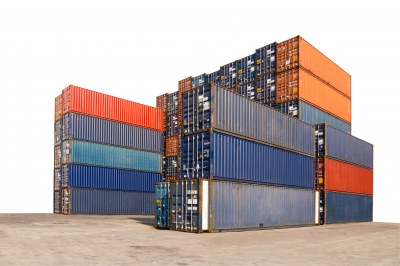
Image courtesy of xedos4 at FreeDigitalPhotos.net