 The Bureau of Customs (BOC) has issued an order that identifies export shipments where stuffing inspection must still be conducted.
Customs Memorandum Order (CMO) No. 20-2015, signed by Customs Commissioner Alberto Lina on July 9 and effective immediately, repeals CMO 04-2015 signed by former commissioner John Phillip Sevilla “insofar as it dispenses with the requirements to stuffing/inspection on all export cargoes.”
CMO No. 20-2015 states that stuffing and inspection requirements on export cargoes are still needed for shipments with alert orders and on four particular types of export shipments: those with import quotas in other countries, such as garments and sugar; those banned for exports; exports of logs, copper, and coffee; and those covered by international agreements to which the Philippines is a signatory.
The presence of customs inspectors are required under the above circumstances.
In case exports do not fall under the four types, “for monitoring purposes, the Customs Control Division (CCCD), or its equivalent unit, shall be furnished a copy of the export declaration for recording and posting, prior to loading, and prior to payment of arrastre charges.”
Moreover, BOC said, “Nothing in this Order shall be construed as diminishing the general powers and authority of the Bureau of Customs to prevent and supress smuggling, enforce tariff and customs laws, and supervise all import and export cargoes under Section 602 of the Tariff and Customs Code.”
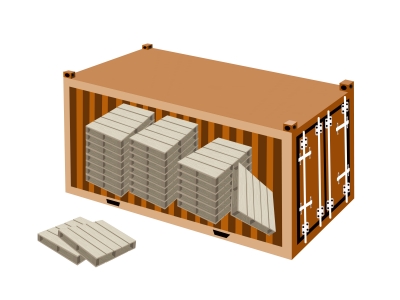
CMO No. 04-2015, issued last January, repealed Section 16.B.1.1. of CMO 22-2010, or the Revised Customs Operations Manual (RCOM). The section states that an exporter needs to file a Notice of Stuffing (NOS) before loading export cargoes into a container, and that a stuffing inspector must be present during the procedure.
RELATED STORY: BOC cancels stuffing policy for export cargoes
The stuffing/inspection requirement was part of CMO 22-2010 but, for some reason, was only implemented last January.
The repeal of the NOS requirement was in answer to the concern of the export community which foresaw numerous problems and additional costs arising from the stuffing order, with the Philippine Exporters Confederation, Inc. and Philippine Chamber of Commerce and Industry seeking a status quo.
For stuffing and loading of certain export cargoes, including the issuance of a notice of loading, BOC will follow procedures set forth in Section 16.B.1.1 of CMO 22-2010. – Roumina Pablo