

The Maritime Industry Authority (Marina) is now implementing the new rate of the documentary stamp tax it issues for certificates and documents following the implementation of the Tax Reform for Acceleration and Inclusion (TRAIN) Law.
Transport Undersecretary for Maritime and current Marina officer-in-charge Felipe Judan advised all concerned maritime entities and individuals that the maritime authority is currently applying the new documentary stamp tax rate of P30 per certificate or document.
Judan’s notification is contained in Marina Advisory (MA) No. 2018-04 dated March 5 and published on March 12, the advisory taking effect immediately.
Judan said the increase in documentary stamp tax is pursuant to Bureau of Internal Revenue (BIR) Revenue Regulation (RR) No. 4-2018, which provides the rules and regulation for implementing the new documentary stamp tax rates under Republic Act No. 10963, otherwise known as TRAIN Law. RR 4-2018 took effect in February.
Under the new law that amends several sections of the National Internal Revenue Code of 1997, the P15 documentary stamp tax for certificates and documents will be doubled.
Certificates and documents covered include those issued by Marina’s Domestic Shipping Service, Franchising Service, Shipyard Regulations Service, Overseas Shipping Service, Manpower Development Service, Maritime Safety Service, Legal Service, and Records Section.
Aside from certificates and documents, TRAIN also doubled the documentary stamp tax for bills of lading or receipts, warehouse receipts, and charter parties and similar instruments.
Also due to the TRAIN Law, which imposed higher excise tax on fuel, most members of the Philippine Liner Shipping Association (PLSA) said they were “constrained to impose a cost recovery mechanism, Excise Tax Recovery Charge (ETRC).”
PLSA noted that the Department of Energy has stated that the additional excise tax will be imposed once old fuel stocks are consumed. The excise may be charged as P2.50 per liter of bunker, diesel, and all other similar fuel oils, and P3.50 per liter of lube oil.
The ETRC will be computed per twenty-foot equivalent unit (TEU), based on the actual excise tax added per liter of fuel and oil multiplied by the individual member lines’ actual fuel consumption over their laden TEU-volume carried.
Atty. Pedro Aguilar, executive director of Philippine Inter-island Shipping Association (PISA) of which PLSA is a member, earlier told PortCalls that stakeholders should expect increases in shipping rates since the approved excise tax on bunker fuel is “substantial.”
READ: Higher shipping rates seen as PH carriers impose recovery charge
He said service providers will not be able to absorb the increase and will eventually pass it on to their customers. – Roumina Pablo
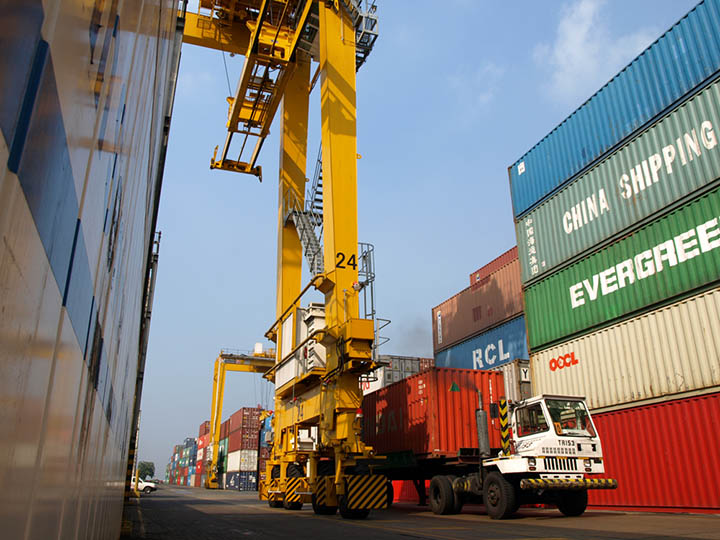
Image courtesy of Suriya Kankliang at FreeDigitalPhotos.net