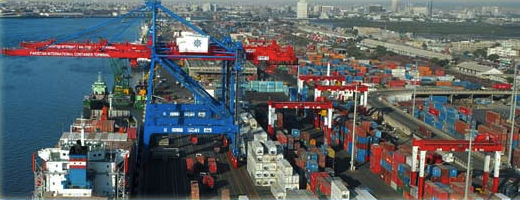
MEMBER lines of the Philippine Liner Shipping Association (PLSA) have temporarily shelved plans to move out of North Harbor, saying a transfer could be just as expensive and time consuming.
The carriers said the losses they are currently incurring due to delays experienced at the North Harbor, which is suffering from a lack of cargo-handling equipment, would almost equal the time and money needed to transfer to either Pier 15 in the South Harbor or Batangas Port.
PLSA member lines including Solid Shipping, Negros Navigation, NMC Container Lines, Lorenzo Shipping Corp., Oceanic Shipping and Philippine Span Asia Carrier, Corp (formerly Sulpicio Lines, Inc) earlier threatened to pull out of North Harbor if new operator Manila North Harbour Port, Inc (MNHPI) failed to install dedicated and suitable cargo-handling equipment for individual lines.
The carriers claimed the lack of equipment has resulted in losses of up to P18 million per vessel per week due to reduced vessel trips from the average three roundtrips a week to only one roundtrip a week.
“Based on our consultations with ATI (operator of Pier 15 and Batangas Port), if we transfer to Pier 15, delays would still be about two days as their port is full which is almost equivalent to the delays we encounter at the North Harbor,” the carriers through PLSA said.
Pier 15 almost exclusively services vessels of Aboitiz Transport System.
“At Batangas, port expenses are lower but the land transfer of passengers and cargoes are again almost equivalent to the losses we now incur at North Harbor,” the carriers explained.
So for now the lines have decided to “stick it out with North Harbor but once (an) increase in delays is recorded or if MNHPI fails to provide the equipment we need…., we will really push through with the transfer either to South Harbor or to Batangas,” the group added.
Use of own equipment
Carriers using the North Harbor are allowed to use their own equipment but only until additional facilities ordered by MNHPI are installed.
Expenses such as manpower, fuel, etc. are, however, shouldered by shipping lines and cannot be passed on to clients resulting in higher overheads for the lines. This compares with the pre-MNHPI takeover practice where all costs related to additional services are care of the shippers.
The number of equipment at the North Harbor has basically remained the same since MNHPI took over the port on April 11, save for two additional 25-35-ton forklifts alternately used by shipping lines.
MNHPI earlier promised the installation of new equipment as early as this month.
The operator aims to increase port productivity from five moves an hour to 25-30 moves an hour within the next six to eight months.