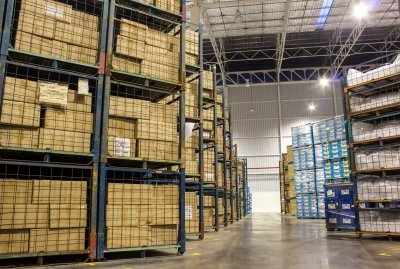

 The recently released draft rules governing customs bonded warehouses (CBWs) and customs facilities and warehouses (CFWs) in the Philippines create clearer regulations on their establishment and operation.
The draft customs administrative order (CAO) will implement certain provisions of Republic Act No. 10863 or the Customs Modernization and Tariff Act (CMTA). It covers all types of CBWs and CFWs listed in the CMTA as well as those that may be created by the Secretary of Finance upon recommendation of the Customs Commissioner.
READ: PH customs modernization act signed into law
Stakeholders are invited to submit their position papers on October 20, the same day a public consultation on the draft order is to be held.
Under CMTA, the CBWs for manufacturing and non-manufacturing purposes and the CFWs are classified separately.
The types of CBWs include customs manufacturing bonded warehouses (CMBW), miscellaneous customs bonded warehouses, industry-specific bonded warehouses, bonded non-manufacturing warehouses, public bonded warehouses, and private bonded warehouses.
CFWs include container yards, container freight stations, seaport warehouses, and airport warehouses.
The allowed period for storing general goods in CBWs is extended to a maximum of one year from the previous three months. For perishable goods, the storage period is three months, extendable to another three for valid reasons. Those that need more than one year of storage, such as shipbuilders, may now request for an extension from the customs commissioner.
For CFWs, imported goods shall be released only when the goods declaration is electronically lodged together with any related document required by CMTA and other regulations. All goods entered into CFWs are subject to the filing of goods declaration within the period specified in Section 407 of the CMTA.
Under the draft CAO, the district collector, upon approval of the customs commissioner, shall designate and establish customs warehouses for storing imported goods or for other special purposes “when the business of the port and trade requires such facilities.”
The customs commissioner shall also issue the rules and regulations defining the requirements for making one eligible to operate a CBW or CFW.
All such warehouses and premises shall be supervised by the district collector, who shall impose the conditions needed to protect government revenue and the goods stored within.
“Such authority shall extend to any additional facilities, such as warehouse extensions, licensed members, clients/end-users and sub-contractors, as the case may be,” the draft CAO states.
It adds that if the clients/end-users or sub-contractors are located in free zones, such authority must be coordinated with the government agency concerned.
Under the proposed rules, a company which is considered a micro or small enterprise has the option to establish its own CMBW or to apply as a member of a customs common bonded warehouse (CCBW).
A company that is considered a medium or large scale enterprise shall not be allowed to apply as member of a CCBW. But existing members of CCBW which are classified as medium or large may opt to remain as member or to establish their own CBW. Medium and large-scale enterprises, however, are encouraged to establish their own CBW.
The authority to operate a CBW, including warehouse extensions and additional facilities, issued pursuant to the CAO shall be valid for three years, counted from the date of approval of the application to establish or renew, as stated in the certificate of authority to operate.
If the CBW is to be relocated, it should have prior written approval from the district collector as approved by the customs commissioner.
Any unauthorized relocation is a ground to suspend or revoke the authority to operate issued to the CBW and its members or subcontractors, or to the CFW, as the case may be.
The authority to operate a CFW, including any additional facilities, is also valid for three years, counted from the date of approval by the commissioner of the application or renewal. – Roumina Pablo
Image courtesy of photoraidz at FreeDigitalPhotos.net





