 The highly lucrative global container terminal sector is no longer immune from the vicissitudes of modern commerce and may find it increasingly difficult to maintain its typically healthy returns, according to a new analysis by Drewry Maritime Research.
The shipping consultancy said the global container port industry “may be entering a new phase of its development, where several of the key variables are looking increasingly challenging.”
It added that for so long, investing in and operating container terminals had been highly profitable and resilient to adverse situations, with typical EBITDA margins in the range of 20% to 45% year after year.
“Underpinned by strong historic growth in demand, the nature of the industry, with its high barriers to entry and limited local competition in each port market has consistently translated into healthy profit margins and returns on investment,” it continued.
In the past few years following the 2008-2009 global financial crisis, the industry saw an average annual growth rate of 5%. However, of late, there has been a “hard slowdown” in growth triggered mainly by economic and political changes in China.
In 2015, said Drewry, global container port growth was only around 1% and in 2016 it is not likely to exceed 2.5%. “These are the lowest growth rates ever seen by the industry (apart from in 2009).”
Drewry said a number of fresh developments are exerting their impact on the fortunes of the container port industry, including changes in ship sizes, the rise of alliances, and the aggressive entry of bold new rivals out to grab a share of the market.
The industry is seeing average ship sizes increase in leaps and bounds, it observed. “In a low growth demand environment, the deployment of bigger ships results in lower frequency services and greater volume peaks. For terminal operators, capex and opex costs are increasing while demand is relatively static.”
Moreover, the formation of larger carrier alliances means that for ports and terminals, the size and complexity of each customer, or alliance, is increasing, along with its bargaining power.
And as ships and alliances get bigger, the choice of ports and terminals that can accommodate them reduces. “The creation of alliances has resulted in market share volatility for many ports—and the makeup of the alliances is going to change again soon due to M&A (merger and acquisition) activity in the liner sector,” said the analysis.
“The new nature of demand is for less fragmented terminal capacity (fewer, bigger terminals needed in each port) which requires consolidation of terminals, both physically and in terms of ownership. However, such consolidation is complex and expensive, and may not be possible, or may take a long time to achieve.”
Finally, the emergence of aggressive new players keen to expand into the sector—companies such as China Merchants, Gulftainer and Yilport—has intensified in recent years, making competition that much tougher.
With the combination of these factors, along with significantly rising costs and slower revenue growth, Drewry said the industry should start thinking of its best options to ensure sufficient returns on investment.
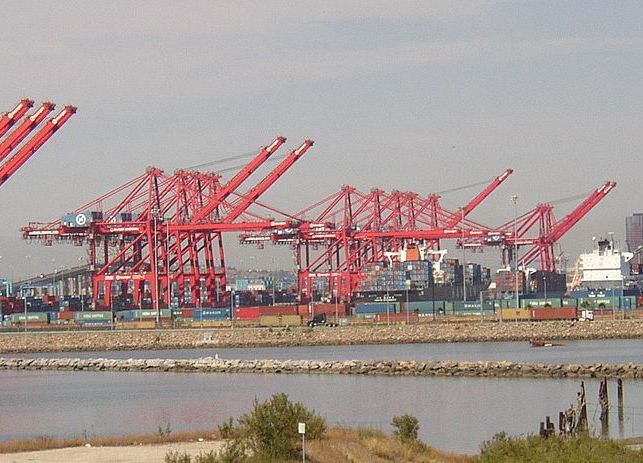
Photo: Pier T in Long Beach