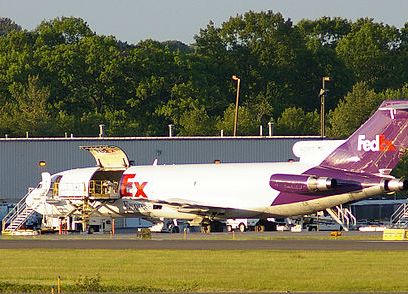

 U.S.-based Federal Express (FedEx) emerged as the most active air freighter in 2014, edging out compatriot UPS and UAE-headquartered Emirates, according to the annual World Air Transport Statistics report released by the International Air Transport Association (IATA).
FedEx outranked other airlines in total freight tonnes carried on scheduled services, chalking up 7.1 million freight tonnes, said the new report, the yearbook of the airline industry’s annual performance.
UPS Airlines comes in second place with 4.2 million freight tonnes followed by Emirates (2.3 million), Korean Air (1.5 million), and leading Asia-based airline Cathay Pacific Airways (1.5 million).
Rounding off the top 10 are China Southern Airlines in sixth place (1.3 million freight tonnes), followed by China Airlines (1.3 million), All Nippon Airways (1.2 million), Air China (1.2 million), and Qatar Airways (1.2 million).
Globally, cargo markets showed a 5.8% expansion in freight tonne kilometers (FTKs), outstripping a capacity increase of 5% and lifting load factors to 48%, said the study.
In terms of FTKs, the top 10 is again led by FedEx, followed by Emirates, UPS, Cathay Pacific Airways, Korean Air, Lufthansa, Singapore Airlines, Qatar Airways, Cargolux, and China Airlines.
IATA said that in 2014, airlines operated some 100,000 flights per day and transported 51.3 million tonnes of cargo, equivalent to around 35% of the total value of all goods traded internationally.
Cathay Pacific’s August traffic
Meanwhile, Cathay Pacific Airways reported just a small increase in cargo volume in August 2015 compared to the same month last year.
Its two airlines Cathay Pacific and Dragonair carried 148,109 tonnes of cargo and mail in August, an increase of 0.8% compared to the same month last year. Cargo and mail load factor fell by 1.9 percentage points to 60.6%. Capacity, measured in available cargo/mail tonne kilometers, rose by 3.5% while cargo and mail revenue tonne kilometers (RTKs) flown increased by 0.4%. From January to August, tonnage rose by 6% against a capacity increase of 7.8% and a 7.9% rise in RTKs.
“August is traditionally one of the quieter months for our air cargo business and that proved to be the case last month,” said Cathay Pacific general manager for cargo sales & marketing Mark Sutch. “We operated more capacity than in August 2014 but the tonnage carried improved only marginally while the load factor fell, highlighting the overall weakness of demand.”
Sutch predicts a traditional winter peak season. “In those markets where we face stronger competition and capacity growth, we have the ability to leverage strong network feed over our hub to maintain good loads on our long-haul trunk routes at a sustained yield.”
Photo: BMRR