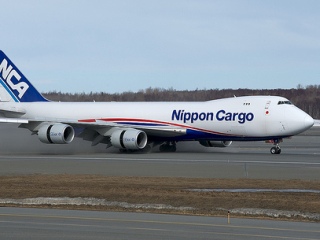
FOREIGN airlines are against a tax regulation which they say puts them at a disadvantage to Philippine-flagged international airlines.
The Board of Airline Representatives (BAR), which represents international airlines operating in the Philippines, said a recent Bureau of Internal Revenue (BIR) regulation that revised the tax base on foreign airlines from average billing to actual billing per passenger does not make for a level-playing field.
Under Revenue Regulation 11-2001 issued last July 20, the BIR also added rental fees, advance payments, penalties and other service charges in the computation of the tax aside from ticket price, excess baggage fees, cargo fees and mail fees.
“Philippine carriers are not subject to the same tax regime in international routes where they operate and compete with foreign carriers,” BAR first vice chairman Steven Crowdey said in a letter dated July 27, 2011 and addressed to Finance Secretary Cesar Purisima.
“The administrative measure will only make the tax computations more complicated and burdensome given the range of itineraries, the various places of issuance of tickets, the complexity of airline pricing,” Crowdey added.
“BAR’s issue was the lack of level playing field as the tax is slapped only on foreign carriers and not local airlines.”
Under the National Internal Revenue Code, international air carriers are subject to a 5.5% tax on revenues, of which 3% represents the common carrier tax on gross receipts and 2.5% the tax on all cargo and passenger revenues originating from the Philippines.
Foreign chambers in the Philippines had already expressed their reservation over the revised ruling, asking for its deferment until a position paper is presented to authorities.
Earlier this month, there was a move at the House of Representatives to remove the common carriers tax and gross Philippine billings tax (GPBT) levied on international air carriers to boost the country’s tourism and trade.
House Bill 4444 (Rationalizing the Taxes Imposed on International Air Carriers Operating in the Philippines) seeks to amend Section 28 of the National Internal Revenue Code of 1997, as amended, and provides that any income derived by an international air carrier from doing business in the Philippines shall be exempt from income tax. In addition, the bill removes the 3% tax on the quarterly gross receipts of international air carriers.