 Air and sea freight movers continue to hold low expectations about the industry’s current and future growth, as reflected in the marginal month-on-month decline in the May results of the Stifel Logistics Confidence Index.
The report said that while air freight confidence improved, it was negated by a slightly greater decline in sea freight stakeholders’ outlook.
This as the sea freight industry is projected to sustain another year of losses, calculated at between US$6 billion and $10 billion this year, as 2016 began with sizable losses for carriers in the first quarter.
The air freight market, too, was also in negative territory in the first quarter, as global freight tonne kilometers (FTKs) declined by 2% compared to the previous year. This was despite capacity growth of 6.9%, as measured in available freight tonne kilometers (AFTKs).
Nonetheless, there were positives for the sector as air freight traffic across Europe was up by 2.1% in Q1 2016 year-on-year. FTK grew 1.3% in Europe during the same period, with the Middle East also improving, by 2.4%.
But the largest region by market share, Asia-Pacific, saw FTK declines throughout the same period. North American FTKs also contracted.
The air freight logistics confidence index gained 0.4 point in May 2016, totalling 50, down 9.5 points from May 2015, and 5.7 points from May 2014.
The present situation results rose by 1.2 points to 47.2, chiefly derived from a gain in the Europe-to-Asia lane, which was nonetheless the poorest performing of the lanes. Two of the other three lanes noted gains, with Asia-to-Europe the exception. Europe-to-U.S. continued as the strongest lane, with U.S.-to-Europe also marking gains.
In the expected outlook for the next six months, the results by lane were almost unanimously negative, aside from a a small gain on the Europe-to-Asia lane. Asia-to-Europe fell the furthest, while Europe-to-U.S. and U.S.-to-Europe also posted declines.
The logistics confidence index for sea freight declined to 44.5, precipitated by declining confidence in both the present and expected situations. The present situation fell by 0.9 point to 40.7, while the expected situation fell 0.7 point to 48.3.
In the present scenario, three of the four lanes saw month-on-month declines, led by Europe-to-Asia lane, which hit its lowest ever point. In addition, U.S.-to-Europe and Asia-to-Europe both fell. Europe-to-U.S. was the only lane to buck the trend, with a slight improvement over April.
The expected situation index for sea freight also fell. While a significant gain saw the Asia-to-Europe line rise, even greater declines in the Europe-to-U.S. and U.S.-to-Europe lanes offset this. The remaining lane, Europe-to-Asia, saw a decline, too.
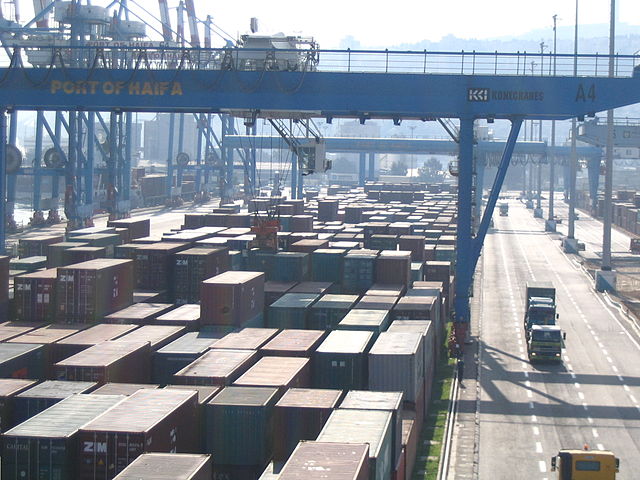
Photo: Yuval