 The year 2015 is turning out to be a so-so one for airfreight, but this has not led to a decline in freighter orders, which remain robust, according to Cargo Facts.
After a seemingly good start, 2015 devolved into something of a limbo year for airfreight, said the industry record provider in a new report. By March, the one-time boost in airfreight business generated by the U.S. West Coast port labor strife began to fade, and the remainder of the year turned sluggish.
But the year has not been a total dud, said the report, adding that demand will likely be up between 1% and 2% from 2014.
However, despite pessimism about demand, carriers worldwide ordered more production freighters than they have for many years, it continued. FedEx ordered another fifty 767-300Fs as part of its ongoing fleet modernization, but even without this order, “the total would still have been higher in 2015 than in any of the previous three years,” said the report.
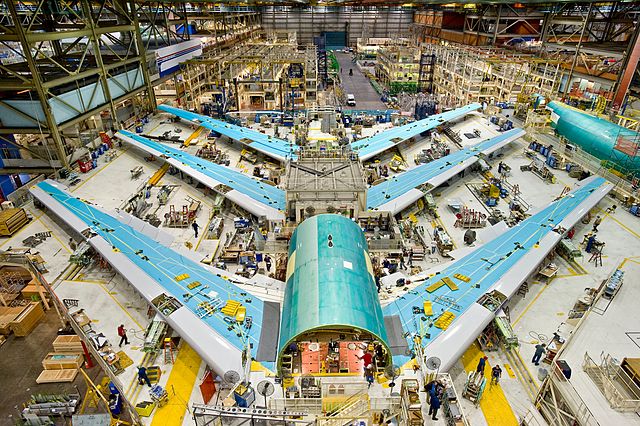
Aircraft builders Airbus and Boeing currently offer a total of four production jet freighters: Airbus’ A330-200F, and Boeing’s 747-8F, 777F, and 767-300Fs.
On bookings, Airbus booked four orders of its A330-200F, its only production freighter, in 2015, all from Turkish Airlines. During the year, the manufacturer delivered three units, two to Qatar Airways, and one to Turkish Airlines. To date, Airbus has booked a total of 42 orders for the A330-200F, and delivered 32, leaving it with a backlog of 10 units.
Meanwhile, after a lull of several years, Boeing finally booked six orders for the 747-8F, its largest freighter, from three carriers: Silk Way booked three, AirBridgeCargo, two, and Atlas Air Worldwide Holdings, one. Japan-based Nippon Cargo Airlines cancelled four orders, leaving a total of just two. AirBridge’s parent, Volga-Dnepr Group, sent a letter of intent for twenty 747-8Fs, and has already taken delivery of two. However, whether the group will push through with the rest of the order remains to be seen, said Cargo Facts.
On the delivery side, Boeing handed over seven 747-8Fs to five customers in 2015, with Cargolux and AirBridgeCargo each taking two, while Atlas Air, Korean, and Silk Way each took one. Boeing has now taken orders for eighty-eight 747-8Fs (including from Volga-Dnepr), and has 28 remaining in its backlog.
As for the 777F, Boeing booked 16 orders for the type from four customers: Korean Air and EVA (five each), Qatar Airways (four), and Etihad Airways (two).
During the year Boeing delivered nineteen 777Fs to nine customers: China Southern Airlines and Saudia (four each), Air China Cargo (three), Ethiopian Airlines and FedEx (two each), and Dubai Aerospace Enterprise, Korean Air, Lufthansa Cargo, and Qatar Airways (one each). Boeing has taken orders for 169 units of the 777F, and its backlog now stands at 52.
On the 767-300F, FedEx continued its fleet modernization program with an order for 50 of this in 2016. The logistics giant was also Boeing’s only 767-300F delivery customer in the year, taking a total of 16 units.
Boeing has now taken orders for a total of 190 units of the 767-300F and delivered 108, leaving it with 82 units in its backlog.
Asian carriers post demand decline
Meanwhile, cargo markets in November remained weak for Asia-Pacific airlines, based on traffic figures from the Association of Asia Pacific Airlines (AAPA).
Measured in freight tonne kilometers, air cargo demand declined by 2.4% in November, with key manufacturing economies experiencing soft market conditions as a result of the slowdown in international trade. After accounting for a 1.8% expansion in offered freight capacity, the average international freight load factor fell by 2.9 percentage points to 65.7% for the month.
Andrew Herdman, AAPA director general, said growth in demand narrowed to a 1.8% increase for the first 11 months of the year, dampened by the general slowdown in global trade.
“The air cargo business is suffering from the effects of market weakness in major trading economies, signs of inventory overhang and excess capacity,” he added.