 The government and the House of Representatives (DPR) of Indonesia have agreed to revise down the economic growth target for 2016 to 5.3% from 5.5%, as both sides acknowledged that the lower target was more realistic amid projected global economic challenges next year.
The revised target is close to the latest projections of the Asian Development Bank (ADB), which forecasts Indonesia’s economy to grow 5.4% next year, or lower than the earlier prediction of 6%.
The decision to revise the growth target was one of a number of revisions to several assumptions set in the draft 2016 state budget that were arrived at in a working meeting between the government of Indonesia and Commission XI on financial affairs of the DPR earlier this week, according to national news agency Antara News.
The house budgetary body will use the assumptions as a basis for calculating the posture of the state budget for 2016.
Commission XI chairman Fadel Muhammad said the commission finally agreed to the 5.3% growth target revision from the previous target of 5.5% in the financial notes proposed by the government recently.
ADB’s pared-down outlook
As this developed, the ADB has forecast Indonesia’s economy to grow only 4.9% this year, lower than its earlier prediction of 5.5% due to domestic and global economic pressures.
“We revised down our projection from 5.5 percent earlier to only 4.9 percent due to global factors and delays in the governments investments this year,” ADB deputy director for Indonesia Edimon Ginting stated recently.
He pointed out that the relatively stagnant household consumption, government infrastructure spending constantly hindered by bureaucratic obstacles, and a decline in exports caused by weak external demand have contributed to the economic slowdown in 2015.
Indonesia’s economy is forecast to grow better in 2016, reaching 5.4%, or lower than the earlier prediction of 6%, due to government spending and investment caused by the recent package of government economic policies.
“Accelerated deregulation efforts will strengthen infrastructure investment, and exports will recover partly due to devaluation to contribute to the improving economic performance next year,” Edimon explained.
He said government spending could contribute to the economy in 2016 as the government has made efforts to accelerate budget disbursement by simplifying procedures for land procurement and expediting the process for auctioning off government projects.
Moreover, reform initiatives launched through the recent deregulation policy package and the easing of investment licensing procedures could also boost private investment in several infrastructure projects and accelerate national strategic development projects, he added.
He noted however that some risks still loom large, including possible continued delays in government investment, slow progress of structural reforms, weak demand from export-destination countries, uncertainty in the global financial market, and bad weather caused by the El Nino phenomenon.
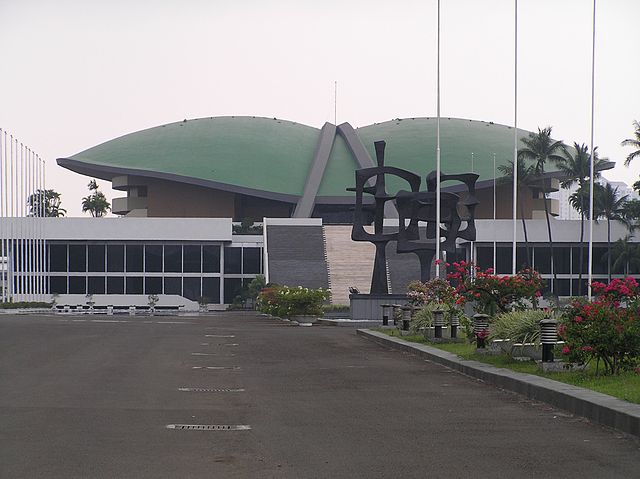
Photo: Davidelit