Harbor Star Shipping Services, Inc. (HSSSI) has received a tug and barge tandem to be used for its services at the recently opened Cavite Gateway Terminal (CGT).
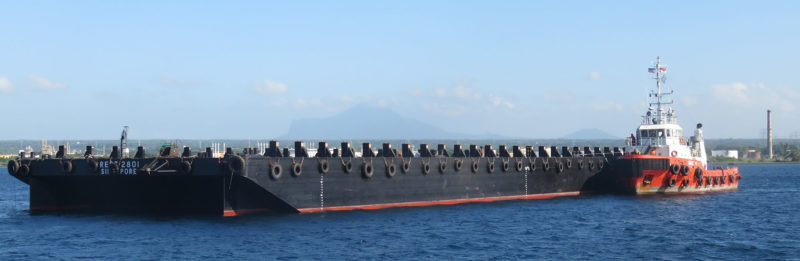
MV Crest Opal and Crest 2801 arrived at the Port of Batangas on November 23, HSSSI disclosed to the Philippine Stock Exchange.
The 32-meter MV Crest Opal, HSSSI’s 44th tugboat, has a 3,200-brake horse power, while Crest 2801 is a 280-foot, 6,000-deadweight tonnage barge, the company’s eighth.
HSSSI said the two “will enable efficient transport of containerized cargo goods to and from Metro Manila and Cavite through coastal waters using chassis roll-on/roll-off operations.”
The company said it is committed “to support the projects of ICTSI and the government’s program of easing traffic congestion in Metro Manila by using waterways as means of transporting goods.” International Container Terminal Services, Inc is the operator of CGT.
HSSSI is one of the barge operators at CGT, the Philippines’ first container roll-on/roll-off (ro-ro) barge terminal in Tanza, Cavite province that formally opened to the public on November 22.
Built on a six-hectare property at a cost of P1.5 billion by ICTSI, the common-use greenfield terminal can accommodate 115,000 twenty-foot equivalent units (TEUs).
CGT is a common-use facility for barge operators, a condition set by the Department of Transportation when it approved the unsolicited proposal for its operation. Currently, CGT has more than three barge operators that clients can choose from.
CGT was built to facilitate seaborne transfer of containers from Cavite to major Luzon port facilities including those in Manila, Subic, and Batangas. Since waterways, not roads, are used to transfer the containers to the terminal, CGT is seen to reduce truck trips on city roads by an estimated 140,000 annually.
“This terminal is designed to reduce the number of trucks and help in decongesting Metro Manila roads. We hope that this pioneering terminal will be duplicated throughout the country to further facilitate trade,” ICTSI chairman and president Enrique Razon, Jr. said in a speech during the inauguration ceremony.
CGT’s services also include empty container maintenance and repair for both dry and reefer boxes, container weighing, and other container-related services. The terminal can also handle special containers, out-of-gauge project cargoes, and ISO tanks. Its current fleet of equipment includes one empty handler, two reach stackers, two forklifts, and three prime movers.