 Low-cost carrier Cebu Pacific ended 2018 with a net income of P3.9 billion, 50.7% lower than the P7.908 billion earned in 2017 due to a “challenging macro environment.”
Cebu Pacific in a statement said the growth in business last year came amidst a challenging environment marked by high fuel prices, a volatile Philippine peso, rising interest rates, increased competition, the six-month closure of Boracay, and operational limitations in the country’s key airports.
Revenues, on the other hand, increased 9% year-on-year in 2018 to P74.1 billion, on the back of continued demand for air travel and robust growth of its cargo business.
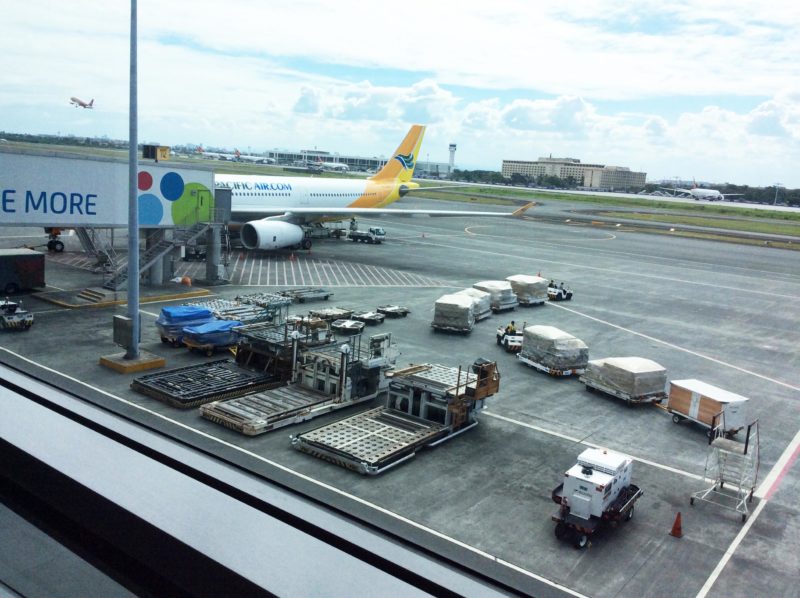
Revenue growth was driven by sustained growth in passenger revenue, which was up 9% at P54.3 billion; and a 6% growth in ancillary revenue. Cargo on the other hand, posted year-on-year double-digit growth of 19%, as Cebu Pacific carried 210 million kilograms of cargo.
The airline flew a total of 20.3 million passengers in 2018, up 2.7% versus 2017. On average, Cebu Pacific flights were 85% full during the year, with the carrier mounting 390 flights daily.
“Despite the pressures posed in 2018, we remained resilient. We were able to expand our network by up-gauging our flights touching congested airports,” Cebu Pacific chief operations officer Michael Ivan Shau said.
“2019 will be a different story though—we have already received the first of our fuel-efficient A321NEO orders from Airbus, and we expect 10 more new-generation aircraft this year. We also just announced four new domestic routes. 2019 is definitely the year we accelerate our growth,” he added.
“We will continue to pursue our fleet up-gauging strategy and invest in the latest aircraft technologies, as well as develop secondary hubs like Cebu and Clark. We will also continue to grow our cargo business with the incoming ATR freighters as well as continue our digital transformation for us to be more agile and adaptable to changing customer expectations,” Shau said.
Cebu Pacific currently offers flights to a total of 37 domestic and 26 international destinations, operating an extensive network across Asia, Australia, the Middle East, and the USA. Its 71-strong fleet is comprised of one A321NEO, 35 Airbus A320, seven Airbus A321CEO, eight Airbus A330, eight ATR 72-500, and 12 ATR 72-600 aircraft. The ATR aircraft are used by its subsidiary Cebgo for domestic destinations where jet operations are not possible.