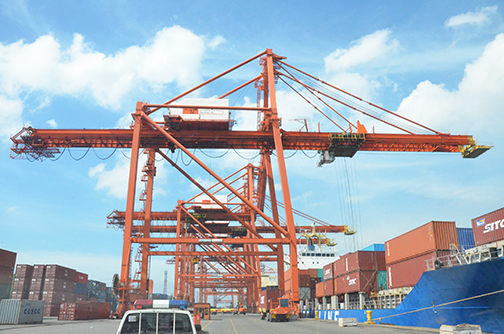
 The Philippines’ total merchandise trade grew 13.5% to US$15.58 billion in September 2018 from $13.72 billion in the same month last year due to robust imports of capital goods, data from the Philippine Statistics Authority (PSA) showed.
PSA said imports rose 26.1% to $9.75 billion in September 2018 from $7.77 billion in September 2017. Specifically, purchases of capital goods grew 25.4% in September, the sixth month of its double-digit growth rate. Accounting for 32.5% of imports in January to September 2018, purchases of capital goods amounted to more than $26 billion.
Exports, however, declined 2.6% to $5.83 billion in September 2018 from $5.99 billion in September 2017 as sales of manufactures and minerals products decreased. This was after exports reported increases for two months in a row in July and August following five straight months of decline.
The country’s balance of trade in goods, meanwhile, continued to increase to a $3.93 billion deficit in September 2018, from the $1.75 billion deficit in September 2017.
Socioeconomic Planning Secretary Ernesto Pernia in a statement said the growth in import of capital goods could indicate that firms are making long-term investments.
“The import of raw materials and intermediate goods could also indicate the vibrancy of the manufacturing sector as it is expected to sustain its positive growth in the remaining months of the 2018,” Pernia said.
“Philippine import payments are seen to remain elevated until 2019, primarily due to imports of capital goods and raw materials to sustain the government’s Build, Build, Build infrastructure and manufacturing resurgence programs,” the Cabinet official added.
On the decline of exports, Pernia said that “improving the export competitiveness of the country as stipulated in the Philippine Export Development Plan 2018-2022 becomes more urgent.”
He said the plan promotes, among others, an enabling environment for innovation to boost exports growth.
“Moreover, given the weak global demand, the country must really pump up domestic demand. We need to encourage expansion of domestic firms, and also encourage foreign investment in domestic market-oriented firms,” Pernia said.
He added that removing cumbersome regulatory impediments by effectively implementing the Ease of Doing Business Act and enacting the 11th Regular Foreign Investment Negative List (RFINL) will help attract more investments into the country.
“The recent RFINL is a step in the right direction of encouraging the expansion of domestic market-oriented firms. But we will require legislative action to further allow more foreign investments in other areas and activities, eventually creating more jobs and reducing imports,” Pernia said.
China remained the country’s top source of imports, followed by South Korea and Japan, while the United States was the top export destination, followed by Hong Kong and Japan.