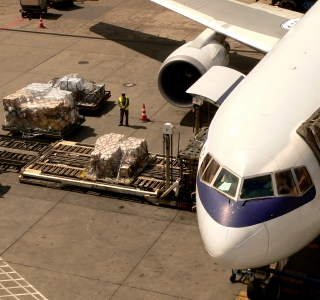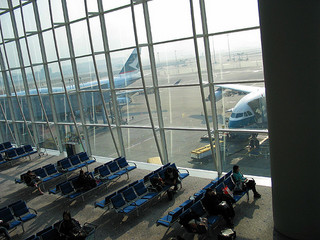

 Hong Kong International Airport (HKIA) registered a smaller cargo volume in February this year, but throughout grew when traffic figures in the first couple of months were combined.
Cargo contracted by 13.3 percent to 248,000 metric tons in February from the same period last year, but it rose to 3.6 percent to 582,000 metric tons for the combined months of January and February.
Airport Authority Hong Kong (AAHK), operator and developer of HKIA, said in a statement that combining the first two months of 2013 evened out the timing difference of the Chinese New Year.
Cargo throughput for January-February got a lift mainly from an 11 percent year-on-year increase in transshipments. Airfreight throughput to and from Taiwan and North America outperformed other key regions, a company statement said.
“Cargo recorded slower tonnage in February due to the closure of mainland factories during the holiday period,” said Stanley Hui Hon-chung, chief executive officer of AAHK.
But he said cargo is expected to gradually stabilize in the coming months as factories resume operations. “We remain cautiously optimistic for the cargo growth in the longer run.”
On a rolling 12-month basis, cargo increased by 3.1 percent to 4.05 million metric tons.
Photo: bryangeek