 The Hong Kong International Airport (HKIA) wants to exceed expectations in the conduct of carbon studies and adoption of a method for evaluating the environmental impact of its planned three-runway system.
Besides the airport-wide carbon audit being carried out since 2008, Kevin Poole, deputy director of projects at Airport Authority Hong Kong (AAHK), said they will also conduct carbon studies according to the Airports Council International’s Airport Carbon Accreditation Programme.
The program, launched in Europe in 2009 and extended to Asia-Pacific in November 2011, independently assesses and recognizes the efforts of airports to manage and reduce their carbon emissions, and is the only institutionally endorsed carbon management certification standard for airports.
HKIA aims to achieve “optimization” level, the second highest level of accreditation of the program and the highest currently being pursued by airports in Asia-Pacific. It will make the airport “the forerunner among airports in the Asia-Pacific region as well as on par with the 20 airports in Europe that have achieved the same level of accreditation,” AAHK said in a media statement.
Moreover, the group said that in addition to fulfilling the requirements of the Environmental Impact Assessment’s Ordinance using Social Return on Investment (SROI), they will use other internationally recognized assessment approaches.
“SROI is an impact assessment methodology adopted mostly in small scale community or charity projects,” said Wilson Fung, executive director of corporate development at AAHK said.
Given its limitations, Fung said they are conducting extensive research on policy guidelines adopted by the World Bank, European Commission, the United States, United Kingdom, and Australia for evaluating transport projects to help them develop a globally accepted evaluation approach suitable for the three-runway system.
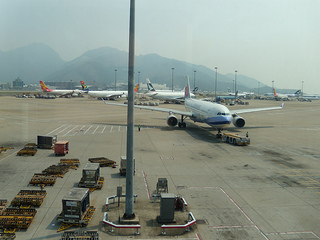
Photo: Jephso