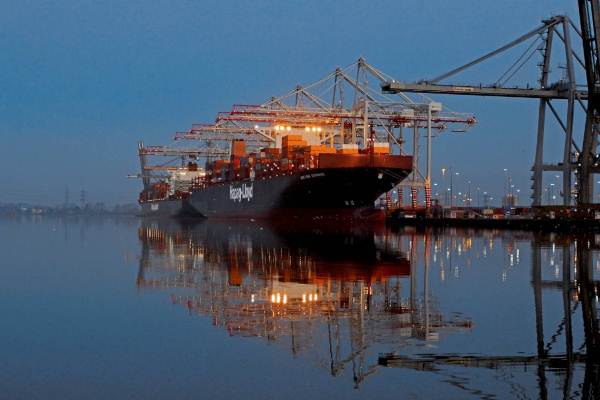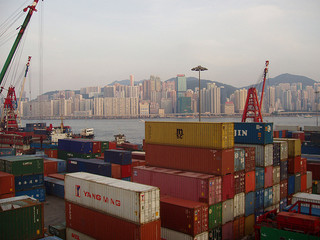
 Striking dock workers at Hongkong International Terminals have moved their three-week protest rally from the Kwai Tsing Container Terminals to the office of HIT owner Li Ka-Shing at Cheung Kong Centre building.
The strike began on March 28 with some 450 dock workers demanding salary increases and improvements to their working conditions. The protest action has affected operations at the port and threatened the reputation of Hong Kong as the world’s third largest container hub.
The strikers have relocated their mass protest to the Cheung Kong Centre to ask Li to step in and resolve the conflict.
The relocation came after the dock workers and port contractors did not come to an agreement on salary adjustments in an April 16 meeting. The Confederation of Trade Unions, the strike organizer, wants a 17 percent to 24 percent pay hike.
Most of the six contractors at the port have promised to raise the salaries of the workers, even as they insisted that the current wage structure being implemented met “reasonable market level.”
HIT, a subsidiary of Li’s Hutchison Port Holdings, has said that the protesters’ industrial action should be resolved by the subcontractors that employed them, and not by the port operator.
Photo: artist in doing nothing