 Hong Kong has moved up to top spot as the most competitive economy in the world, and Singapore stepped up to third place, but Asia’s overall competitiveness has declined since last year, according to the latest rankings released by the IMD World Competitiveness Center.
The U.S. has surrendered its status as the world’s most competitive economy after being overtaken by Hong Kong and Switzerland, said the center, a research group within the Swiss-based International Institute for Management Development (IMD) business school. The center has published the ranking each year since 1989.
The 2016 edition ranks Hong Kong first, Switzerland second, and the U.S.A. third, with Singapore, Sweden, Denmark, Ireland, the Netherlands, Norway, and Canada completing the top 10.
Asia losing competitive edge
Hong Kong and Singapore aside, however, the research suggests Asia’s competitiveness has declined markedly overall since the publication of last year’s ranking.
Taiwan (no. 14, down from last year’s 11th place), Malaysia (no. 19 from no. 14), South Korea (no. 29 from no. 24), and Indonesia (no. 48 from no. 42) have all suffered significant falls from their 2015 positions, while China declined three notches, landing in 25th from 22nd place last year. The Philippines went down one spot to no. 42.
Other Asian nations in the ranking covering 61 economies moved up one to three rungs. These are Japan (no. 26 from no. 27), Thailand (no. 28 from no. 30), India (no. 41 from no. 44).
Professor Arturo Bris, director of the IMD World Competitiveness Center, said a consistent commitment to a favorable business environment was central to Hong Kong’s rise and that Switzerland’s small size and its emphasis on a commitment to quality have allowed it to react quickly to keep its economy on top.
“The USA still boasts the best economic performance in the world, but there are many other factors that we take into account when assessing competitiveness,” he said.
“The common pattern among all of the countries in the top 20 is their focus on business-friendly regulation, physical and intangible infrastructure and inclusive institutions.”
A leading banking and financial center, Hong Kong encourages innovation through low and simple taxation and imposes no restrictions on capital flows into or out of the territory.
It also offers a gateway for foreign direct investment in China Mainland, the world’s newest economic superpower, and enables businesses there to access global capital markets.
The study reveals some of the most impressive strides in Europe have been made by countries in the East, chief among them Latvia, the Slovak Republic and Slovenia.
Western European economies have also continued to improve, with researchers highlighting the ongoing post-financial-crisis recovery of the public sector as a key driver.
Meanwhile, 36th-placed Chile is the sole Latin American nation outside the bottom 20, while Argentina, in 55th, is the only country in the region to have improved on its 2015 position.
Professor Bris said: “One important fact that the ranking makes clear year after year is that current economic growth is by no means a guarantee of future competitiveness.
“Nations as different as China Mainland and Qatar fare very well in terms of economic performance, but they remain weak in other pillars such as government efficiency and infrastructure.”
Rich getting richer
Data gathered since the first ranking was published more than 25 years ago also lend weight to fears that the rich are getting richer and the poor poorer, said Professor Bris.
“Since 1995 the world has become increasingly unequal in terms of income differences among countries, although the rate of increase is now slowing,” he said.
“The wealth of the richest countries has grown every year except for the past two, while the poorer countries have seen some improvement in living conditions since the millennium.
“Unfortunately, the problem for many countries is that wealth accumulation by the rich doesn’t yield any benefits for the poor in the absence of proper social safety nets.
“Innovation-driven economic growth in poorer countries improves competitiveness, but it also increases inequality. This is obviously an issue that demands long-term attention.”
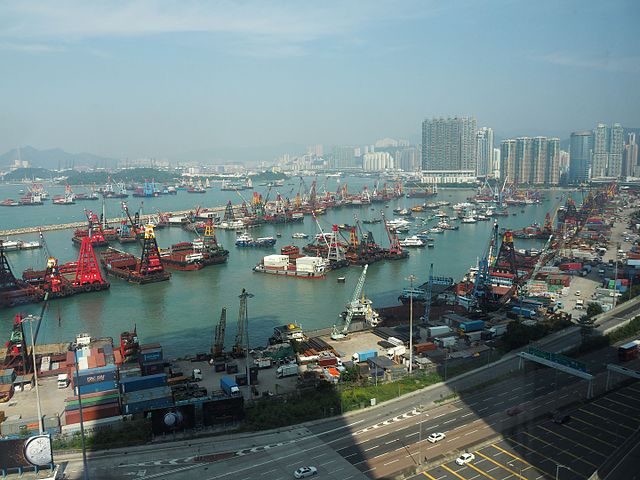
Photo: Laika ac from UK – Hong Kong