
 Airport Authority Hong Kong (AA) has announced that the passenger security charge (PSC), collected by airlines on behalf of the AA from passengers departing from Hong Kong International Airport (HKIA), will be raised to HKD50 (US$6.37) from HKD45 for tickets issued on or after 1 October 1, 2018.
The adjusted charge will not be applied to tickets issued before October 1 even if travel takes place on or after that date, AA stated.
In line with the “user pays, cost recovery” principle stipulated in the Hong Kong Aviation Security Programme, the adjustment recovers the additional costs for enhanced security measures and systems of HKIA to be put in place in the coming years.
The AA is upgrading the airport’s facilities and security systems, such as CCTV and baggage screening system, introducing new equipment with adoption of new technology such as biometrics, and adding manpower to “maintain the best level practice in security at HKIA for its passengers as well as operational efficiency,” the airport operator said.
The Board of Airline Representatives in Hong Kong was consulted on the adjustment of the PSC and expressed its support. The PSC will be further adjusted to HKD55 with effect from October 1, 2021. The last time the PSC was adjusted was in 2014, said AA.
Traffic volume still rising for Cathay Pacific
Meanwhile, Hong Kong-based air carriers Cathay Pacific and Cathay Dragon carried higher volumes of passengers and cargo and mail in June 2018 compared to the same month in 2017, according to traffic figures from the Cathay Pacific Group.
The sister airlines carried a total of 2.93 million passengers last month—an increase of 4.1% compared to June 2017. The passenger load factor increased 0.2 percentage points to 85.3%, while capacity increased by 3.8%.
In the first six months of 2018, the number of passengers carried grew by 1.9% while capacity increased by 3.2%.
The two airlines carried 180,354 tonnes of cargo and mail last month, an increase of 5.8% compared to the same month last year. The cargo and mail load factor rose by 2.3 percentage points to 70.6%. Capacity was up by 2.0% while cargo and mail revenue freight tonne kilometers (RFTKs) increased by 5.5%.
In the first six months of 2018, the tonnage rose by 7.5% against a 4.1% increase in capacity and a 7.3% increase in RFTKs.
Cathay Pacific director of commercial and cargo Ronald Lam said: “Frontend demand across our network remained strong during the period, while backend demand also picked up moderately thanks in part to the Dragon Boat Festival and 1 July holidays. Our European and United Kingdom routes performed relatively well. A small yield growth came on the back of improved business travel and traffic mix over last year.”
In terms of cargo, tonnage picked up towards end of the month, he added.
“We observed a particular rise in demand on routes to Japan, owing to some capacity tightening in the market, while there was also increased uplift into the United States from Hong Kong and mainland China,” said Lam. “Looking ahead, we are closely monitoring geopolitical developments and their effect on tariff and currency movements, which have the potential to significantly impact both our passenger and cargo businesses.”
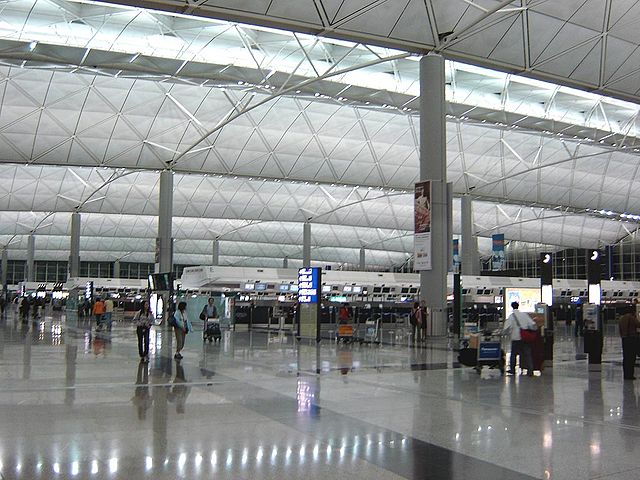
Photo: User Siqbal