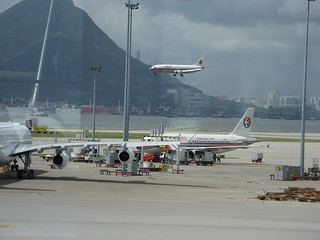
IATA:11-month freight traffic up 2.8%
THE International Air Transport Association (IATA) recently reported that freight traffic for the first 11 months of 2005 remained sluggish despite registering
a 2.8% growth. IATA director general Giovani Bisignani, in a statement, said that while the industry is growing is good news, the pace of growth has geared down a notch as a result of weaker demand from some critical sectors such as information technology. "Next year we expect freight growth to return to more normal levels in the 6% range as the business sectors driving air freight recover – particularly the IT and semi-conductor industries," he added. Regional variations in traffic are pronounced for the 11-month period. Middle Eastern carriers recorded the highest growth rates for both passenger and freight of 12.4% and 14%, respectively. Asia-Pacific carriers saw passenger traffic grow at 6.6% while freight expanded at 3.9%. North American carriers saw their passenger traffic increase 9.1% with freight contracting by 0.3%. European carriers followed the same trend with passenger traffic up 6.4% while freight lagged behind at 1.1%. "Turning growth into profitability has never been more critical. Airlines ended 2005 with a $6-billion loss on top of $36 billion in losses accumulated between 2001 and 2004. As we battle the high and air navigation service providers," said Bisignani. Airlines have reduced non-fuel unit costs by 14% since 2001. As a result the break-even price of oil has risen from $22/barrel (Brent) in 2003 to $48/barrel (Brent) in 2005. Based on continued cost reduction and an oil price of $53/barrel (down from $54.5 in 2005) airlines are expected to return a loss of $4.3 billion in 2006. "We will only see profitability in 2007 when we expect a return of $6.2 billion. This is a net profit margin of 1.5%, not even enough to cover the cost of capital and nowhere near recovering the billions lost since 2001. A long and difficult agenda for change involving all partners is still ahead of us," said Bisignani. He said the price of fuel, cost efficiency will continue to be a top priority not only for airlines but for every partner in the value chain including airports.