The overall financial prospect for the global air transport industry is positive for 2016, but this is largely owing to the vibrant passenger business, as cargo growth is anticipated to remain flat and freight profit to contract, according to the International Air Transport Association (IATA).
IATA revised upwards its 2016 financial outlook for global air transport profits to US$39.4 billion, from the $36.3 billion forecast in December 2015. The profit is seen to be generated from revenues of $709 billion, for an aggregate net profit margin of 5.6%. 2016 is predicted to be the fifth consecutive year of improving aggregate industry profits.
In 2015 airlines generated a global aggregate profit of $35.3 billion (re-stated from $33.0 billion estimated in December 2015). All regions are making a contribution to the $4.1 billion boost over 2015 profits with improved results, but there are stark regional differences in performance. Over half of the industry profits will be generated in North America ($22.9 billion) while African carriers are forecast to continue generating an overall loss (-$0.5 billion).
“Lower oil prices are certainly helping—though tempered by hedging and exchange rates. In fact, we are probably nearing the peak of the positive stimulus from lower prices,” said Tony Tyler, IATA’s director general and CEO.
“Performance, however, is being bolstered by the hard work of airlines,” he added. “Load factors are at record levels. New value streams are increasing ancillary revenues. And joint ventures and other forms of cooperation are improving efficiency and increasing consumer choice while fostering robust competition. The result: consumers are getting a great deal and investors are finally beginning to see the rewards they deserve.”
“Airlines are producing solid results even with some strong economic headwinds. It’s an impressive performance and the mood of the industry is generally optimistic,” said Tyler.
However, the cargo industry is not part of this bright outlook. “The cargo side of the business remains in the doldrums with 2.1% growth in demand,” said the organization. Adding to its woes is the rise in cargo capacity as airlines continue to grow their fleets with long-haul wide-body aircraft to meet strong passenger demand growth.
Moreover, the world economy is seen to remain sluggish. GDP is expected to expand by 2.3% in 2016, down from 2.4% in 2015 and the weakest growth since 2008 when the global financial crisis hit, said IATA.
Thus, the organization forecasts cargo yields to fall by 8.0% this year. Overall cargo is expected to generate $49.6 billion in revenues, down from $52.8 billion in 2015.
Of the regional carriers, Asia-Pacific airlines are seen to get hit the most by the moderating cargo activity.
“Asia-Pacific carriers have a 40% share of global air cargo markets. As a result they continue to feel the brunt of stagnation in this sector, which is holding back the improvement in financial performance. Challenges include intense competition as the budget sector expands, restructuring in the Chinese economy and continuing infrastructure and cost difficulties in the Indian market,” it added.
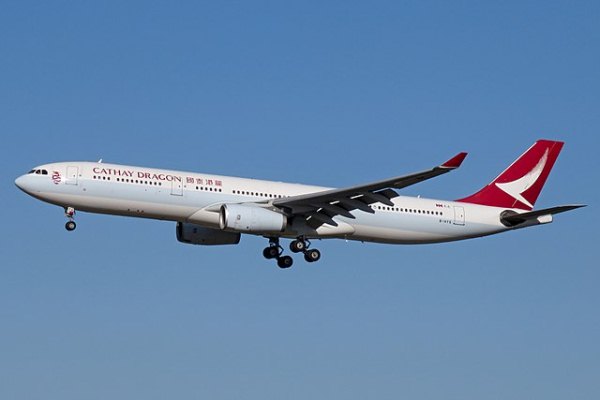
Photo: Jnpet