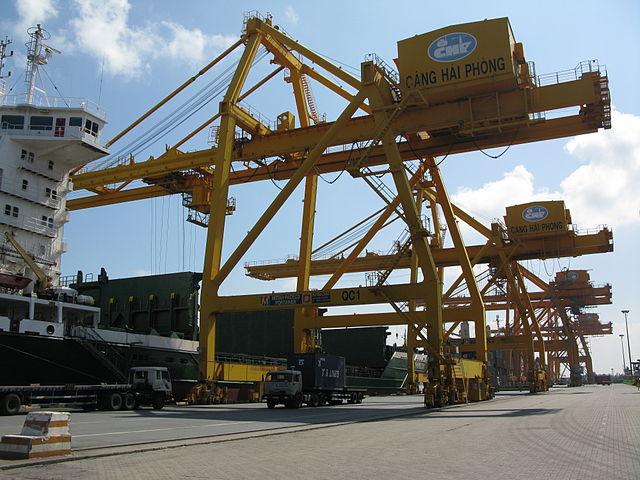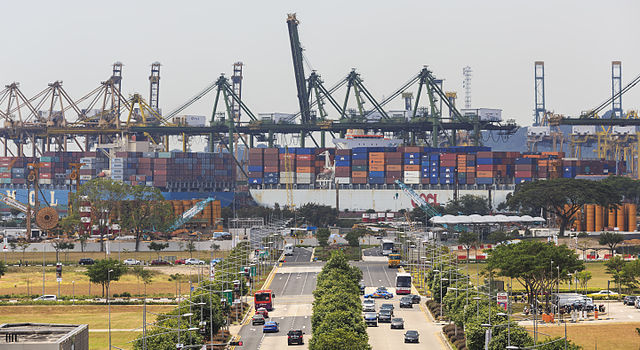
 The International Maritime Organization (IMO) has released a new set of toolkits for assessing and addressing emissions from ships and ports.
The Ship Emissions Toolkit and Port Emissions Toolkit have been developed under the GEF-UNDP-IMO Global Maritime Energy Efficiency Partnerships (GloMEEP) Project, in collaboration with the Institute of Marine Engineering, Science and Technology and the International Association of Ports and Harbors.
Astrid Dispert, GloMEEP technical adviser, said the guides—available free to download from the GloMEEP website—would help support countries seeking to develop and strengthen national policy and regulatory frameworks on preventing air pollution and reducing greenhouse gas emissions from ships.
“Both the ship and port emission toolkits provide practical guidance on assessing emissions so that a national emission reduction strategy for the maritime sector can be developed. The GloMEEP guides provide a wealth of information on assessment techniques and how to develop a national strategy, as well as links to further practical guidance,” Dispert said.
Both toolkits have been developed through extensive testing and feedback from practical use of the toolkit guides during national and regional training activities held in the 10 lead pilot countries participating in the GloMEEP project.
“Ports and shipping are intrinsically linked—as such, efforts to reduce maritime emissions need to extend beyond seagoing ships alone,” said Dispert.
“IMO’s MARPOL Annex VI regulations on air pollution and energy efficiency are aimed at ships, but it is clear that for port emissions to be reduced, national authorities need to consider emissions from all sources, including cargo handling equipment, trucks—as well as domestic vessels.”
By utilizing these guides, countries can develop national strategies which will address emissions from their maritime sector as a whole—protecting public health and the environment and contributing to the fight against climate change, she further stated.
Such strategies would include incorporating IMO regulations into national legislation. Annex VI of IMO’s International Convention for the Prevention of Pollution from ships (MARPOL) includes regulations to limit air pollution from ships as well as energy efficiency regulations to cut greenhouse gas emissions from ships.
The Ship Emissions Toolkit includes three practical guides. Guide 1, on the rapid assessment of ship emissions in the national context, offers guidance for conducting a rapid assessment and generating both quantitative and qualitative information about a country’s maritime emissions status at the time of analysis.
Guide 2 (incorporation of MARPOL Annex VI into national law) provides useful information for policymakers and legislators in countries preparing for accession; as well as information for developing the legal framework to implement the regulations in MARPOL Annex VI in the domestic legislation.
Guide 3 (development of a national ship emissions reduction strategy) supports countries in developing a national ship emissions reduction strategy that can guide potential policy and investment options.
The Port Emissions Toolkit includes two guides. Guide No.1, on the assessment of port emissions, serves as a resource guide for ports intending to develop or improve their air pollutant and/or GHG emissions assessments.
Guide No.2, on development of port emissions reduction strategies, serves as a resource guide for ports intending to develop an emissions reduction strategy for port-related emission sources.
In April 2018, IMO adopted its initial IMO strategy on reduction of GHG emissions from ships, which sets out a vision to reduce GHG emissions from international shipping and phase them out, as soon as possible in this century. The initial strategy recognizes the important role of ports as well as shipping in achieving the ambitious targets.
Photo: 7