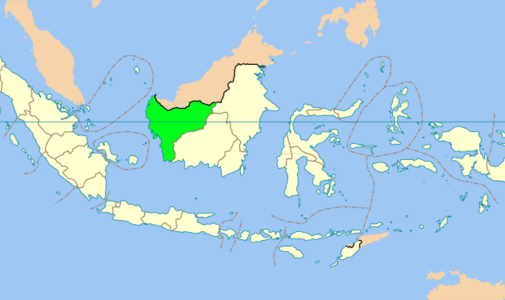
 Indonesian state-owned port operator PT Pelindo II announced the immediate construction of an international port in Kijing, West Kalimantan that can accommodate bigger ships.
The project has received support from the central government, as well as the regional government and local communities, said Pelindo II’s technical and risk management director Dani Rusli Utama.
It is expected to be completed between 2018 and 2019 at a cost of around IDR5 trillion (US$375 million), according to a report from state-run Antara News.
“This development is urgent, especially with regards to reducing logistical costs in West Kalimantan. We are currently using the Dwikora port in Pontianak, but it is operating at two or three times its intended capacity,” said Utama.
The Dwikora port was initially designed to have a capacity of 100,000 TEUs, but this was increased to 250,000 TEUs in order to cope with extra demand.
“However, due to the increasing number of bigger ships that dock in the area every year, it is no longer suitable for further development as it can only handle relatively small ships,” said Utama.
The Dwikora port has a depth of only 6 to 7 meters compared to the proposed 12 to 15 meters at the planned port in Kijing, making the latter more suitable for bigger ships.
“The development of the international port at Kijing will be based on the principle of having a multipurpose port that can handle large containers and liquid cargo,” Utama said.
The first phase of development is to build a multipurpose container port that stretches from about 500 meters to one kilometer long, with a total area of 50 to 100 hectares, he added.
“We hope that the port can better serve all the arriving ships and lower overall operating costs, as well as increase economic activities for the benefit of West Kalimantan,” Utama said.
He also believed that the new port would speed up economic development in the region and improve shipping services to other regions such as Natuna and Jakarta, as well as to international destinations such as the South China Sea and Singapore.
Photo: CC BY-SA 3.0