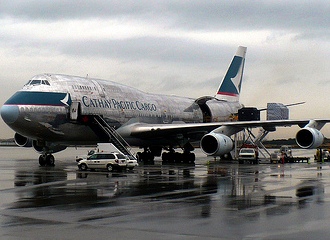

“We saw positive developments for the air transport volumes in May. International passenger load factors rebounded by 0.8 percentage points to 75.8%. Freight volumes improved by 1.2% over April and passenger volumes were up by 1.8%. These will help to alleviate some of the pressure on profits from continued high fuel prices,” IATA director general Giovanni Bisignani said.
“But there are risks associated with political unrest in the Middle East and the European currency crisis. We still expect the industry to make $4 billion this year. That is a pathetic 0.7% margin and another shock could alter the industry’s fortunes dramatically. It’s another tough year for a very fragile industry,” Bisignani added.
The 4% decline in air freight markets in May is skewed as a result of the May 2010 peak for the post-recession restocking cycle.
Since the beginning of the year, freight volumes increased 2%, a figure lower than the 5.5% IATA forecast for 2011.
Carriers in all regions except Latin America and the Middle East saw air freight declines in May from the same month last year. The largest fall was for Asia-Pacific carriers with a 9.2% drop showing the impact of disrupted supply chains in Japan and tighter economic policies in China.
Declines by African carriers, which were down 7.8%, reflected the political disruption in Egypt and Tunisia. European and North American carriers had modest falls of 2.2% and 1.4%, respectively.
For international passenger markets, African airlines’ international traffic increased 1.1% in May from the same month last year while Asia-Pacific carriers recorded an expansion of 4.7%, considerably below the global average of 8%.
European carriers’ traffic improved 10.9%, boosted by increased northern European economic activity and a weaker Euro encouraging trade and inbound travel.
Latin American carriers saw the fastest international growth, up 21.3% vis-à-vis May 2010 and the fastest capacity expansion (15.2%) while Middle East carriers’ international traffic rose 7.8% over May 2010, slightly below the 9.6% capacity expansion that saw load factors slip to 70.8%.
North American carriers have cut capacity for two consecutive months. Year-on-year, traffic is up 4.5% and capacity increased 5.5%.