
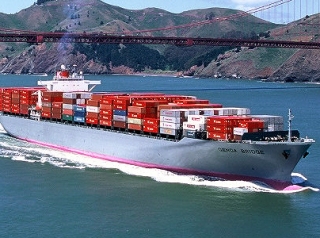
 Japanese ocean carriers Kawasaki Kisen Kaisha (“K” Line) and Nippon Yusen Kaisha (NYK) both foresee increasingly bitter competition in 2014 as they outlined their business strategies for a challenging year.
“K” Line president and CEO Jiro Asakura in his New Year message said they will take a more offensive, rather than their previous protective, line this year, hinting at radical structural changes within the company.
“In our current three-year management plan, I outlined management’s commitment to protecting the company from a collapse of the marine transport market,” he said. “However, from this point onward, I want to focus on policies for taking the steps necessary to move from a protective to an offensive approach.”
He continued: “We are exposed to relentless international competition on a daily basis. In light of these factors, it is crucial that we make radical changes to our traditional structure and methods to remain in the race.”
He said their offensive salvo, already began last year, also involved the decision to resume investments. In 2013, the company announced plans to build eight car carriers and construct a large iron ore carrier and coal carrier.
He added that they had acquired contracts for three LNG carriers in 2013, and in 2014, expected to secure contracts for a shale gas-related transport project that is currently under negotiation.
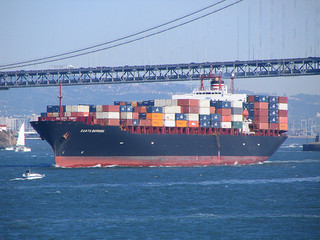
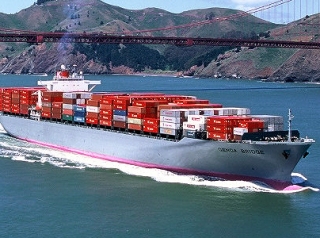
In the container ship business, in the first half of 2013, “K” Line said it would build five 14,000-TEU ultra-large container vessels.
Asakura said: “These cutting-edge vessels will all be in the water from 2015 to 2016, and I am confident they will contribute to a major recovery in earnings.”
Another new management plan is to prioritize the expansion of its logistics business in Asia and Oceania, and the offshore energy E&P support business in the North Sea and Brazil.
“The logistics business takes time to generate profit but we believe that, coupled with demand in Asia, where growth is pronounced, we can develop this into a core business in ten years,” said Asakura.
The company will announce its third quarter results for 2013 and fourth quarter estimates at the end of January.
Noting that its structural reforms and fuel cost-reduction efforts, underway since 2012, have been gradually delivering “favorable outcomes,” Asakura said earnings in 2014 are expected to surpass levels posted in the past two years.
On the other hand, NYK president Yasumi Kudo said that differentiating itself from the competition in 2014 will focus on the intangible or conceptual aspects of shipping—“looking at how we could add value to the existing conventional shipping business.”
“Differentiating ourselves from our competition in terms of the tangible aspects of shipping has become increasingly difficult. Today’s commodification of the shipping business will lead to what I call a ‘red ocean’ where rampant, cut-throat competition to lower prices will become a norm,” he added.
They would take the higher road by creating a “blue ocean,” he further said. “We will differentiate ourselves from the competition by thoroughly eliminating muda [non-value-adding activities], mura [unevenness in production or work activities] and muri [excessive burdens].”