
 The South Korean government will announce a package of fiscal policies that would sufficiently stimulate the economy in the second half amid growing concerns over a further economic downturn, the country’s finance minister said.
Asia’s fourth largest economy has been in the doldrums since the beginning of the year as faltering exports, the key economic driver, weigh heavily on the entire economy, especially production, Yonhap said in a news report.
The latest data showed that South Korea’s industrial output fell 2.8% in April from a year ago, posting negative growth for the second consecutive month and widening its downward pace from March.
Earlier this month, the Bank of Korea (BOK) unexpectedly cut the key rate to a record 1.25% for the first time in 12 months in an apparent move to fuel economic growth in the coming months.
“We are considering sufficient fiscal policies,” Finance Minister Yoo Il-ho said in a Seoul meeting with financial businesses. “The government is making full efforts to revitalize the economy. The fiscal side will lend support to it.”
Global organizations such as the International Monetary Fund (IMF) and the Organisation for Economic Co-operation and Development each cut South Korea’s growth forecast to 2.7%, while the state-run think tank Korea Development Institute lowered its prediction to 2.6%.
The IMF has called for a more aggressive fiscal intervention into the economy, saying, “Speedy implementation of additional fiscal stimulus should be a priority and should be complemented by monetary easing.”
Yoo said the government will announce the economy-boosting plan before long, but was vague on details to draw up an extra budget for this year to reach the growth target of 3.1%.
Experts anticipate that the government will lower the goal when it unveils the strong stimulus plan later this month.
Export prices drop
As this developed, the East Asian nation’s export prices reportedly continued to drop in May from a month earlier, central bank data showed, partly contributing to a prolonged slump in the country’s exports.
In local currency terms, export prices fell 4% year-on-year last month, according to preliminary data from BOK.
May marks the fifth consecutive month there was an on-year drop following a revised 5.2% decline in the previous month.
From a month earlier, export prices gained 2.4%, which however was largely attributed to the weakening of the local currency.
Export prices of industrial goods slipped 4.1% year-on-year in May as prices of petroleum and petrochemical products plunged 25.5%. Prices of agricultural and fisheries products spiked 15.5%.
The cut in export prices apparently hurt the country’s overall exports, which slipped 6% year-on-year in May, marking the 17th consecutive month of drop since the start of last year.
Import prices, in local currency terms, also fell 5.1% year-on-year last month due to the won’s depreciation against the U.S. greenback.
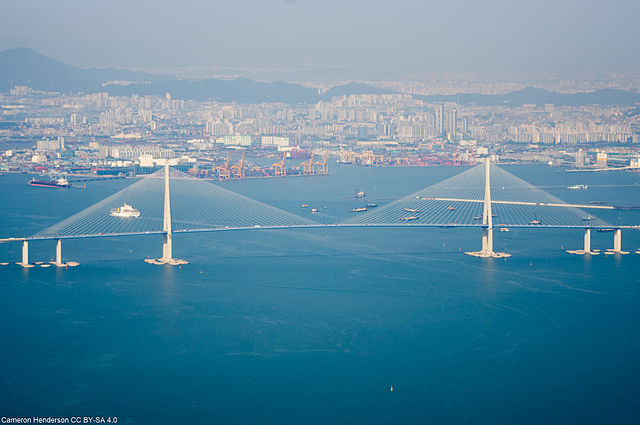
Photo: Cameron Henderson