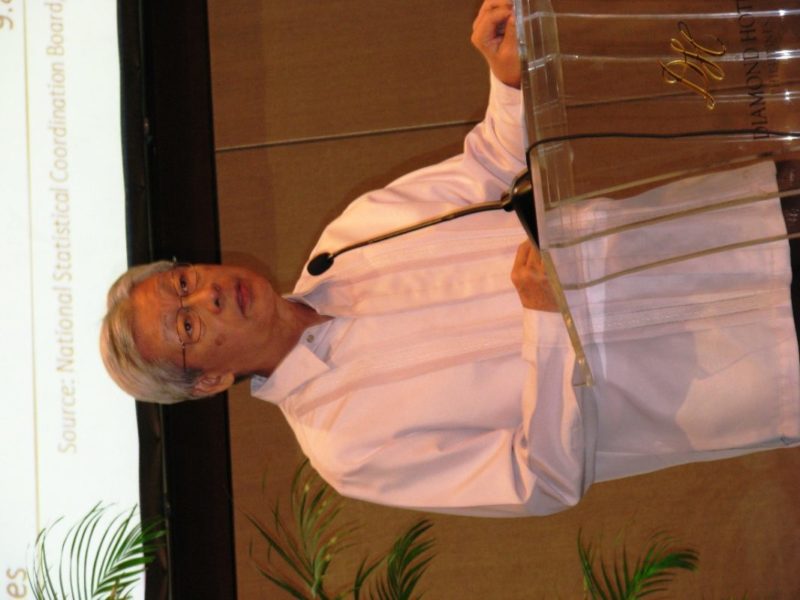
 Manufacturing growth in the Philippines will drive higher demand for logistics services, according to former Socioeconomic Planning Secretary Dr Cayetano W. Paderanga, Jr who was a speaker at the recent PortCalls Cargo Economics Conference.
As a result, outsourcing of in-house transport by manufacturing firms is expected to further boost growth in the logistics sector, Paderanga said during his presentation on “Prospects On Manufacturing And Their Implications on the Logistics Business”.
“As long as the economy is growing, logistics will keep on benefiting not only because of manufacturing but also because of the service sector, retail, and the other areas in the service sector,” he explained.
The relationship also goes both ways: Any efficiencies in the logistics industry will translate to growth in the manufacturing industry.
Paderanga said the country’s logistics industry must also look into opportunities once the ASEAN Economic Community is in place. “The market will be bigger but there’s more competition. So we really need to make logistics more efficient so that our businesses here can compete.”
Based on third to fourth quarter 2012 data from the National Statistical Coordination Board, the industry sector – partly made up of manufacturing and construction — expanded by 2.5%.
“Every unit increase in final demand for manufacturing generates 0.02 unit sales in transport and storage sector,” Paderanga noted.
Manufacturing growth is supported, he said, by relatively low cost of labor, infrastructure development and better than expected global economic growth.
Downsides include power rate hikes, absence of a long-term strategy for growth and weak investment.
The Philippine economy grew 6.6% in 2012 and is expected to see an above 6% growth in 2014.
“Our economy has what it takes to maintain at least 6% growth, on the back of traditional growth drivers such as business processing outsourcing, real estate, tourism, finance on the supply side and remittance-driven consumption, increased government spending and positive exports on the demand side. But more investments are needed to sustain and accelerate growth,” Paderanga said.
With public-private partnership projects — many of which are transport-related infrastructure — as the focus of the Aquino administration, government spending will be high, he added. “The completion of road networks will cut down logistics costs and bring opportunities for companies to grow their businesses.”
For a table on production sectors’ contribution to Philippine economy, click Mfg.
[copyscape]