 Danish logistics and shipping group A.P. Moller-Maersk said all business segments achieved revenue growth in the third quarter compared to the same period last year but warned that U.S.-China trade tensions are starting to hurt shipping and global trade.
Maersk, the world’s biggest operator of container ships, beat third-quarter operating profit forecasts as it reported growth in both ocean and non-ocean segments, with a total revenue increase of 31% to US$10.1 billion, or 12% excluding Hamburg Süd. Growth in non-ocean was at 15%, which now contributes 31% of total revenue. In addition, synergy effects were materialized, it said in a statement November 14.
“Well into our transformation, we are progressing with the integration of our business to better serve customers and unlock the full growth potential within Logistics & Services. As a result, I am pleased to see revenue growth in Q3 across the business, including supply chain services. Our profitability and cash flow is improving, positively impacted by the emergency bunker surcharge announced due to the significant increase in bunker price, synergies from Hamburg Süd and strong collaboration between Ocean and our terminal activities,” said Moller-Maersk CEO Søren Skou.
However, Maersk said the effect of trade tensions between the two economic superpowers could adversely impact on global container trade during 2019 and 2020.
Maersk in its interim report said: “Trade restrictions between the US and China escalated further during Q3. The US Administration imposed tariffs on imports from China with a value of USD 200bn (traded goods), and China immediately retaliated by imposing tariff s on imports from the US worth of USD 60bn.”
Together, it added, “these new initiatives amount to around 2.6% of global value of traded goods. The impact on global trade remains uncertain, but we estimate that the combined effect of all trade restrictions introduced during 2018 could reduce global container trade by 0.5-2.0% during 2019-2020.”
By segment, compared to Q3 2017, revenue in logistics & services increased 7.5% with supply chain management growing 16%. New products are being developed to improve the customer experience, with results already seen where Moller-Maersk was first in the world to launch instant booking confirmation to customers in the container industry, the statement said.
“Furthermore, gateway terminals continued to grow volumes from external customers as well as from Maersk Line and Hamburg Süd, reflecting synergy impact from the closer collaboration. Total synergies with Hamburg Süd of minimum USD 500m excluding integration cost are expected by 2019 as the integration is progressing faster than planned.”
Volumes in ocean grew 27%, 5% excluding Hamburg Süd, which is above the estimated market growth of 2.7%, but lower than anticipated.
Skou elaborated: “Our business performance in Ocean is still challenged by increased bunker prices not being fully compensated through higher freight rates. However, we continue to see improved results in the third quarter after a very weak start to 2018.”
The underlying profit in Q3 amounted to $251 million compared to $254 million in the same period last year. Earnings before interests, tax, depreciation and amortization (EBITDA) increased by 16% despite bunker price increasing 47%.
Looking ahead, A.P. Moller-Maersk now expects a full-year EBITDA in the narrower range of $3.6 billion to $4.0 billion from previously $3.5 billion to $4.2 billion and reiterated the expectations of a positive underlying profit.
The organic volume growth in ocean is now expected in line with the estimated average market growth of 3% to 4% for 2018 (previously slightly below the estimated average market growth of 2% to 4%).
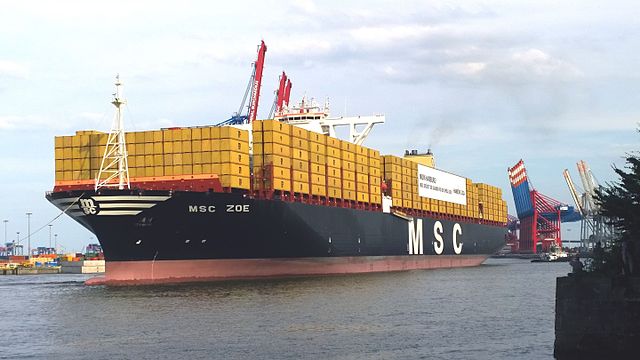
Photo courtesy of Maersk