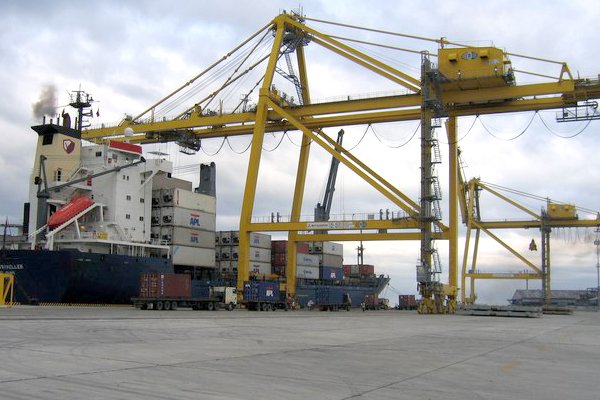

 Container volume at the Mindanao Container Terminal (MCT) in Misamis Oriental southern Philippines grew 5.5% to 54,133 twenty-foot equivalent units for the first quarter of the year from 51,282 TEUs year-on-year.
Compared to the target of 52,000 TEUs, the latest figure was also higher by 4%.
For March however, MCT, operated by International Container Terminal Services, Inc subsidiary Mindanao International Container Terminal Services, Inc, handled 19,028 TEUs, 7% less than the 20,567 TEUs in March 2011.
“There has been a little bit of increase in almost all sectors but not as strong as last year where we were posting high single-digit to double-digit growth,” Phividec Industrial Authority port department manager Dante Clarito told PortCalls. Phividec oversees MCT.
“This is due to slower economic activity evidenced by the not-so-dramatic pick-up of sectors compared to last year,” he added.
Imports have been dominating MCT’s cargo throughput led by shipments of Nestle Philippines which maintains a distribution leaf facility adjacent to the terminal.
Exports are mainly coming from Del Monte.
APL remains the port’s biggest carrier followed by Maersk Line, Regional Container Lines and Mariana Express.
Photo from http://www.ictsi.com/gallery.aspx?p_id=41&id=632&paging=1