
 Completion of tariff liberalization by the end of 2015 by members of the Association of Southeast Asian Nations (ASEAN) is credit positive for the region and will fortify intra-regional trade and economic growth, according to a new report by a global credit-rating agency.
Moody’s Investors Service, in an analysis contained in its new report ”Southeast Asia: ASEAN Economic Integration Credit Positive; Progress Is Incomplete,” said greater intra-regional trade is “credit positive for the region given that growth in other key export markets, such as China, is slowing.”
However, report co-author Rahul Ghosh, a Moody’s vice president and senior research analyst, forecasts that the ASEAN Economic Community (AEC) will face delays in other efforts toward full integration, according to a report by Bernama, Malaysia’s national news agency.
He said regional disparities, a lack of institutional capacity, and a shift in focus towards domestic political issues will delay efforts to eliminate non-tariff barriers, enhance regional labor mobility and financial integration, and implement non-trade aspects of the AEC.
Key issues that hamper full implementation include various disparities among the region’s countries such as population size, per-capita income, and ease of doing business, as well as structural differences in regulatory and tax regimes and corporate governance standards, noted Moody’s.
Moreover, the rate of integration may be affected by national elections to be held in the next two years in Myanmar, the Philippines, Singapore, and Thailand.
The ratings agency said domestic political issues such as uncertainty over the successor of Philippine President Benigno Aquino III and a smooth political transition in Thailand “are likely to dominate policy agendas and encourage candidates to target more populist and nationalist agendas, detracting from regional integration.”
This could mean, Ghosh continued, that the wider positive implications of economic integration will take some time to be felt.
Nonetheless, the relative strength of intra-ASEAN trade, which accounts for roughly 24.2% of the region’s total, will reduce the vulnerability of member states to external shocks, said Moody’s.
Additionally, the rise in intra-regional foreign direct investment (FDI) due to ASEAN’s successful implementation of various free trade agreements to 17.4% of total flows in 2013, from 11.3% in 2007, is another credit positive trend.
Intra-ASEAN FDI is a more stable source of funding and insulates the regional economy from external headwinds, said the ratings agency.
The AEC is scheduled to be formally launched by year-end.
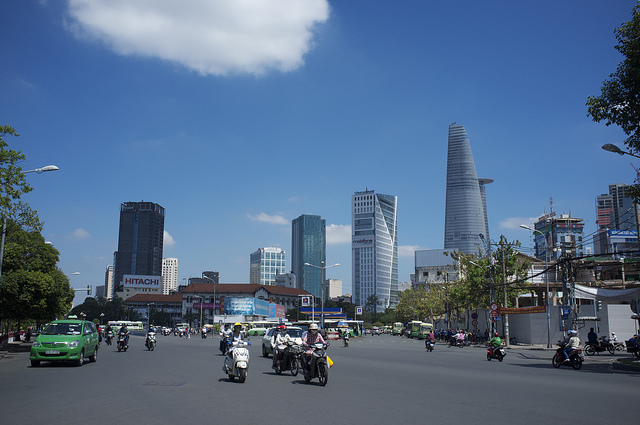
Photo: Aleksandr Zykov