
 In a move that is hardly surprising, global credit rating agency Moody’s Investors Service has changed its outlook on the global shipping sector to negative for 2016, saying it anticipates a widening imbalance between supply and demand to the detriment of the shipping industry.
In a new report, Moody’s traced the downward revision to expectations that supply growth will outpace demand growth this year by more than 2%, suppressing freight rates, particularly in the dry bulk and container ship segments.
The outlook for the tanker segment remains stable as low crude oil prices will continue to boost demand for tankers.
“Even though the tanker segment continues to perform strongly, we expect the supply-demand gap for the industry overall to exceed 2% in 2016, and possibly into 2017, as large new vessel deliveries coincide with subdued demand for dry bulk and container ships,” said Marie Fischer-Sabatie, a Moody’s senior vice president and author of the report.
China’s slowdown in particular is weighing on demand for commodities, such as coal and iron ore, which in turn affects dry bulk seaborne transportation demand.
On the back of weaker freight rates in the dry bulk and container ship segments, Moody’s now forecasts a low single-digit percentage decline in aggregate EBITDA for shipping companies in 2016, versus growth in the low single-digits in its previous forecast late last year.
It added that the positive impact of declining oil prices will be less felt by the industry this year.
“While fuel prices, which make up a large cost item for container shipping companies, have continued to fall over the past six months, the benefits to the container shipping segment will fade somewhat in 2016 because they have already passed lower fuel costs on to their customers via reduced freight rates, limiting the upside,” it said.
Last February, another rating firm, Standard & Poor’s, forecast that global container shipping will continue to face difficult operating conditions over the coming year, characterized by fragile demand and chronic structural oversupply in the industry.
In January 2016, the Baltic and International Maritime Council (Bimco) said the fundamental imbalance of the container shipping market worsened in 2015. While the demand side delivered only a sluggish growth level, the supply side jumped by 8.1%, the “highest supply side capacity expansion ever.”
While this year is expected to bring in less new capacity, Bimco pointed out that all fleet growth will happen in the size segments larger than 8,000 TEUs, adding to the supply saturation.
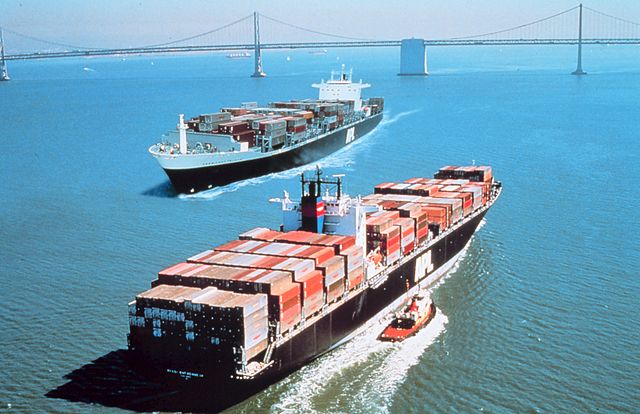
Photo: National Oceanic & Atmospheric Administration (NOAA), USA