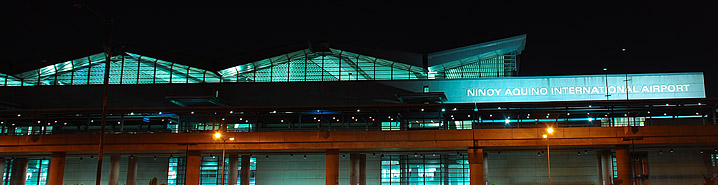

 The Philippine Department of Transportation and Communications (DOTC) expects to operate 75% of the Ninoy Aquino International Airport Terminal 3 (NAIA 3) by December following positive preliminary talks between government and the facility’s Japanese contractor Takenaka Corp.
Government operates only half of the terminal with the rest yet to be completed. This is the subject of negotiations between government and Takenaka.
Transport Secretary Manuel Roxas II is flying to Japan soon to meet with Takenaka officials. He will likely present a memorandum of agreement to formalize scope of work for the terminal.
“Our target is that by December of this year, 75% of Terminal 3 will be operational with the other 25% by the first quarter or certainly by the first half of next year,” Roxas said.
“There is no specific date yet as to when the signing of the contract works agreement detailing specific work on Terminal 3 could take place, as negotiations on costing and pricing still need to be completed,” he added.
DOTC is also finalizing negotiations on the contract price for the installation and rehabilitation of 23 systems necessary to make the NAIA 3 fully operational.
Estimates show the initial cost is expected to reach $40 million although there have been reports government will likely agree to a much reduced cost.
A messy legal battle has kept NAIA 3 from operating fully. It may be recalled that Philippine International Air Terminals, Co (Piatco) in 2003 filed an arbitration request before the International Chamber of Commerce in Singapore to compel the Philippine government to honor its contract to allow Piatco, which had constructed the terminal, to operate and maintain the facility for 25 years. Piatco also sought $565 million in damages from the Philippine government.
The Philippine Supreme Court in 2003 declared the PIATCO concession agreement null and void for having been “amended and re-stated” without the stamp of approval of the National Economic and Development Authority.
The court said Piatco predecessor Paircargo Consortium did not possess the requisite financial capacity when it was awarded the NAIA-3 contract and that the agreement was contrary to public policy.
PIATCO’s foreign investor, Fraport, separately sued the Philippine government at the International Center for the Settlement of Investment Disputes (ICSID) in Washington. But in August 2007, the ICSID affirmed the SC’s nullification of the concessions and rejected Fraport’s claim because of its violation of the Anti-Dummy Law.
Photo from http://125.60.203.88/miaa/