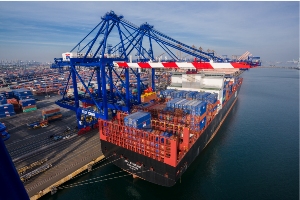
Digitization is rapidly transforming the ocean container shipping industry, according to INTTRA, the world’s ocean shipping electronic marketplace.
In a new whitepaper— Blueprint 2032: How Technology Transforms Ocean Container Shipping– INTTRA, the ocean container shipping industry’s largest neutral electronic transaction platform, reports that the pace of technology innovation is accelerating as businesses seek new and more efficient ways to optimize.
“Digitization is now a competitive necessity,” says John Fay, CEO of INTTRA. “We’ve reached a tipping point in the global shipping industry when information technology is now the primary means for CEOs and their companies to achieve and increase long-term profitability. We are enabling shippers to rethink processes, and to digitize their operations through our unique position as a neutral service provider.”
“We are now about to enter a new and exciting phase in ocean shipping empowered more by networks and greater interconnectivity,” said Inna Kuznetsova, COO and President of INTTRA. “Data analytics will be an exciting part of this transformation.”
“Establishing a neutral digital network is the next big step,” adds Kuznetsova. “Connecting the ocean shipping community in a networked environment with technology such as Blockchain will lead to expansion and exchange of analytics across multiple vendors.Operational, financial and informational work streams will be integrated, which will trigger breakthroughs in cost reduction and operational efficiency. INTTRA is the company that drives innovation as a neutral platform and can help lead this evolution.”
INTTRA sees three technology trends converging near term that will move the ocean container shipping industry forward:
- Network integration across systems, applications and partners: Technology such as Blockchain will simplify transaction processes and reduce costs;
- Real-time status of containers and cargo: Tracking devices connected by the “Internet of Things” driving greater efficiencies and improving shipment planning;
- Artificial Intelligence: AI will enable companies to transition from big data to more accessible business analytics that will suggest higher probability outcomes.
INTTRA outlines several actions that will prepare shippers for the future, including the participation in industry-wide working groups to enable standardization; digitizing business processes; and investing in technology such as Blockchain, analytics and artificial intelligence to reduce costs and identify new opportunities.
The Blueprint 2032 whitepaper may be downloaded here.
Image courtesy of cookie_cutter at FreeDigitalPhotos.net