

The Philippine Institute of Petroleum (PIP), a group of big oil players in the Philippines, said it supports the implementation of the fuel marking program as a way to help curb oil smuggling.
“As early as last year, our members have been working closely with the Department of Finance [DOF] to ensure the program’s proper and effective implementation. We support the government’s efforts to curb smuggling, which continues to undermine the industry and the government in general,” said PIP, members of which include Petron, Pilipinas Shell Petroleum, Chevron Philippines, PTT Philippines, Total Philippines, and Isla LPG.
The group said DOF and its attached agencies Bureau of Customs (BOC) and Bureau of Internal Revenue (BIR) consulted PIP’s member companies on formulating the program’s implementing rules, and conducted visits to the members’ facilities.
Marking of fuel products, whether imported from abroad or manufactured in the Philippines, becomes mandatory five years after the Tax Reform for Acceleration and Inclusion (TRAIN) law took effect in January 2018. Fuel marking aims to curb oil smuggling and plug revenue losses arising from the illegal importation or the misdeclaration of petroleum products.
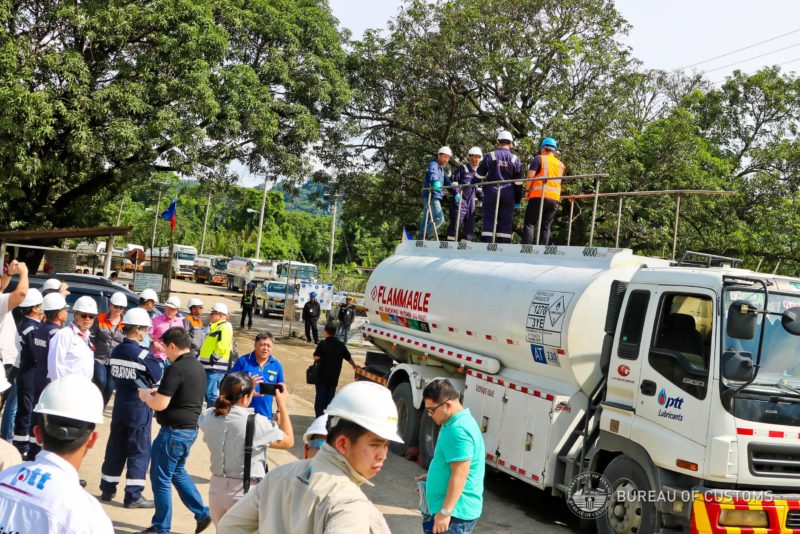
The fuel marking program, which was formally launched last February, also includes random field testing and confirmatory tests on the fuel required to be marked so as to check compliance with the mandatory marking requirement.
PIP said that prior to the TRAIN’s passage, around P40 billion in government revenue was being lost to petroleum smuggling, a figure it said was validated by various independent studies.
The group added that fuel marking will address the shortfall in revenue collection “provided that it is done on a level playing field” and implemented across all industry players in order for it to be fully effective.
“The success of this program would mean a significant increase in tax collection and the opportunity to utilize these for much-needed social services and infrastructure. Consumers would also be assured of the quality of fuels in the market coming only from reputable sources,” PIP said.
DOF undersecretary Antonette Tionko earlier said the fuel marking program would be implemented in the last quarter of the year following the signing on July 5 of the implementing rules embodied under Joint Circular (JC) 001-2019, which prescribes the mandatory marking of refined, manufactured, or imported gasoline, diesel and kerosene in the Philippines, including those withdrawn from Free Zones to be introduced into the country, after the taxes and duties have been paid.
To provide the fuel marking services is the joint venture of Swiss-based SICPA SA and the local firm SGS Philippines.
According to JC 01-2019, BOC and BIR will implement the program, including the collection of marking fees.
Under the National Internal Revenue Code, as amended, BIR shall collect the fuel marking fees for locally refined or manufactured petroleum, while BOC shall do this for imported petroleum products.
All costs from the procurement of the official fuel markers shall be borne by the refiner, manufacturer, or importer of petroleum products. The government may subsidize the cost of official fuel markers in the first year of implementation.