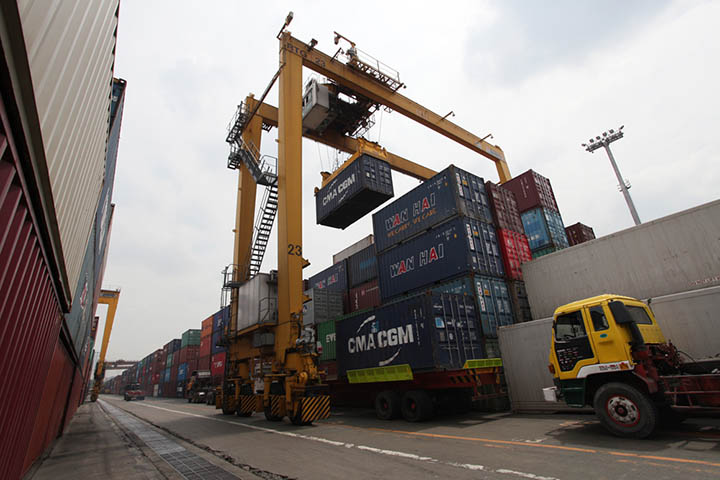
SLOWER oil shipments, more than any other factor, negatively affected the Bureau of Customs’ (BOC) August collection.
Customs Commissioner Angelito Alvarez refused to provide figures because they were still being analyzed. The agency was, however, expected to collect P27.12 billion in August, so far this year’s highest monthly target.
The port of Limay in particular has had a major effect on the August collection, offsetting the positive performance of other ports, Alvarez said.
Limay’s August collection goal is P2.9 billion but initial estimates point to the port posting a shortfall of P1.4 billion.
“Definitely, collection is down. You cannot recover if you have that big a shortfall,” Alvarez said.
Since last week, Alvarez has been announcing it would be hard for the BOC to meet targets as August is considered a “ghost month”, or a month characterized by, among others, slow imports. Shipments are expected to pick up starting September in preparation for the Christmas season.
The Department of Energy (DOE) said oil smuggling is costing the government as much as P60 billion in annual losses from taxes and duties, or double the initial estimate of P30 to P35 billion.
The DOE said oil smuggling is one of the reasons why pump prices vary widely in certain areas.
To help curb fuel smuggling, DOE is planning to maximize the use of marker dyes to determine the source of petroleum products. Marker dyes are used to determine which types of imported fuel have been cleared for entry into the Philippines.
Second-hand apparel as new source of revenues
Meanwhile, if Alvarez has his way, second-hand apparel (locally called ukay-ukay) should be legalized and taxed to help boost revenue collection.
Alvarez said 18 containers of such goods could easily bring in P9 million in revenues for the BOC.
Alvarez said he spoke with a group of congressmen, including House Speaker Feliciano Belmonte, to look at reviewing the ban on the trade of second-hand goods. The lawmakers reportedly agreed to do so.
Ukay-ukay goods are banned for safety and health reasons.
Alvarez, however, noted the irony in the ban. During calamities, he noted, government agencies send letters to the BOC seeking distribution of seized second-hand apparel to calamity victims.
Alvarez said it is during these times when beneficiaries are more vulnerable to diseases and should therefore not be exposed to hand-me downs of questionable origin.