
Philippine Airlines (PAL) recorded a P4.6 billion loss in 2017, a reversal from the P5.9 billion income it posted in 2016, attributing the loss to higher operating expenses.
Consolidated revenues last year amounted to P129.5 billion, up 13.2% from 2016’s P114.5 billion, PAL said in a disclosure to the Philippine Stock Exchange.
The airline attributed the increase in revenues mainly to higher passenger revenues brought about by the growth in volume of passengers carried and number of flights mounted.
During the year, new international points and city pairs were introduced. Flights between Clark and Seoul, Cebu and Chengdu, Kalibo and Chengdu, Kalibo and Guangzhou, and Cebu and Bangkok as well as daily services to Kuala Lumpur commenced.
On the domestic network, route sectors originating from Clark Airport in Pampanga, Cebu, and Davao were also introduced during the year. PAL carried 14.5 million passengers vis-a-vis 13.4 million in 2016.
Revenues from the passage segment rose 14.2% to P110.636 billion from P96.846 billion, while its cargo business recorded revenue of P8.397 billion, 21% up from P6.931 billion.
Last year, PAL carried an average of 39,634 passengers per day and 674 tons of cargo per day.
Revenue from ancillary services likewise went up 1.9% to P10.07 billion from P9.878 billion.
Consolidated expenses amounted to P136 billion in 2017, up by 26.7% from P107.3 billion in 2016. The main drivers for the increment were attributable to flying operations expenses, maintenance, passenger service, aircraft and traffic servicing, and reservation and sales.
As of December 2017, PAL’s route network covered 35 points in the Philippines and 42 international destinations, with a fleet of 86 owned and leased aircraft.
In the next five years, PAL said modern and technologically advanced aircraft on order will be delivered. The airline plans to further expand its route network and introduce new destinations and route sectors.
Last year, it was certified a 4-Star airline by Skytrax, the international air transport rating organization.
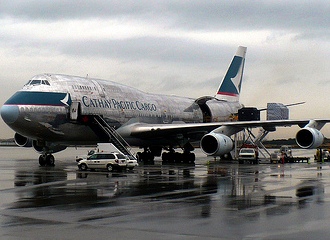
Image courtesy of jscreationz at FreeDigitalPhotos.net