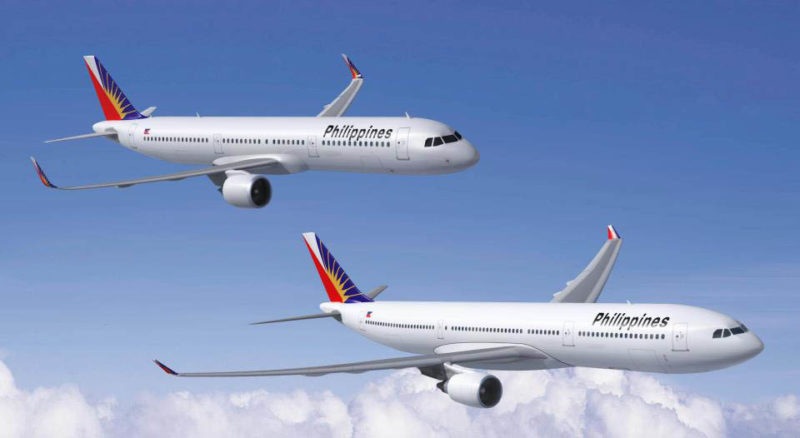

Philippine Airlines (PAL) is seeking to impose fuel surcharges on domestic operations, following other airlines that have made the same petition to offset rising fuel costs due to the accelerating price of oil and the weaker peso.
In a petition to the Civil Aeronautics Board (CAB), PAL is requesting to be allowed to impose a fuel surcharge of P282 each way for its Luzon-to-Luzon/Visayas and vice versa route.
For its Luzon-to-Mindanao and vice versa flights, it is asking for a P405 fuel surcharge, and for its Visayas-to-Visayas route, P158. A surcharge of P222 is being sought for its Mindanao-to-Visayas/Mindanao and vice versa route.
The petition will be heard by CAB on June 27.
PAL president Jaime Bautista earlier said the airline was spending more than US$80 per barrel of fuel. PAL’s petition for fuel surcharge on its international operations, which still awaits decision, will allow it to “recover portion of the additional costs of fuel,” Bautista said.
Cebu Pacific
Low-cost carrier Cebu Pacific and sister airline Cebgo this month also filed their petitions seeking fuel surcharges for passenger services in the amounts of P70, P140, P210, and P280 for domestic flights.
For international flights, Cebu Pacific is proposing the rates of $9, $12, $16, and $26, depending on the destination.
For domestic cargo operations, the two airlines propose surcharges of P1, P1.50, and P2 per kilogram based on actual weight. For international cargoes, Cebu Pacific requests $0.20, $0.25, and $30 per kilogram based on actual weight.
Surcharge on cargoes for both domestic and international will not apply to shipments under the minimum weight break of 5 kilograms and below.
Cebu Pacific chief executive officer Lance Gokongwei said that “the effect of the fuel price and currency has been quite significant for us.”
“The effect of fuel, approximately P20 million per month for every dollar increase, and the effect of currency is about P65 million per month because of the weaker peso,” he explained in an interview.
“In aggregate, it is costing us P700 million more per month to fly the same route. So we will have to avoid losses and we will really have to become more efficient,” he noted, adding that the CAB petitions will enable the airlines to recover half of the increased costs. Fuel is one of the major operating costs of airlines.
CAB executive director Carmelo Arcilla earlier said petitions for fuel surcharge were “inevitable” due to rising fuel prices and the Tax Reform for Acceleration and Inclusion (TRAIN) law, which increased the excise tax on fuel.
Airlines had been imposing fuel surcharge until 2015, when it was scrapped by CAB due to the continued decline of oil prices at the time.
Some domestic shipping lines this year have already imposed fuel surcharges due to higher excise tax on fuel.