
 Singapore Changi Airport handled 5.56 million passenger movements in March, an 8.7% year-on-year increase, while cargo shipments dipped 0.6% to 187,550 tonnes compared to the same period last year.
In March, passenger traffic growth was observed across all regions, said airport operator and developer Changi Airport Group. Traffic to and from Europe grew strongly at 13%, helped by the return of Qantas’ daily Sydney-London service (via Singapore) and Lufthansa’s resumption of its five-weekly service to Munich.
Passenger movements between Singapore and Australia also recorded a robust 9% increase, with a 12% growth in traffic to and from Sydney. Changi Airport’s other top country markets—China, India, Indonesia, Malaysia, and Thailand—also registered growth for the month, with India (+23%) and China (+13%) leading the way.
For the first quarter of this year, Changi Airport registered 15.8 million passenger movements, 5.0% higher than the same period last year. Among Changi’s top 10 country markets, India and Japan led the gainers, with growth of 14% and 9%, respectively.
Airfreight movements registered an increase of 3.6% for the quarter, totalling 512,080 tonnes. Among Changi’s top cargo markets, Japan and South Korea were among the fastest growing by airfreight volume.
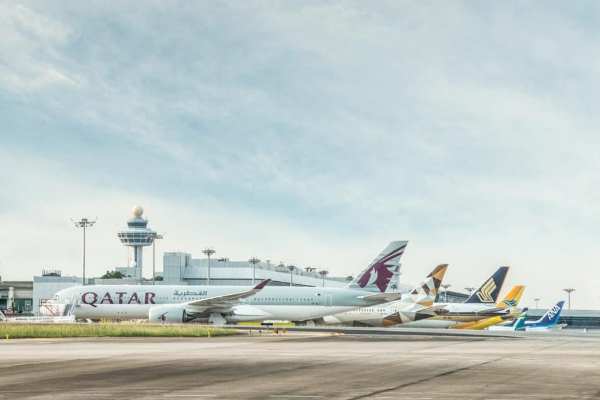
Photo courtesy of Changi Airport